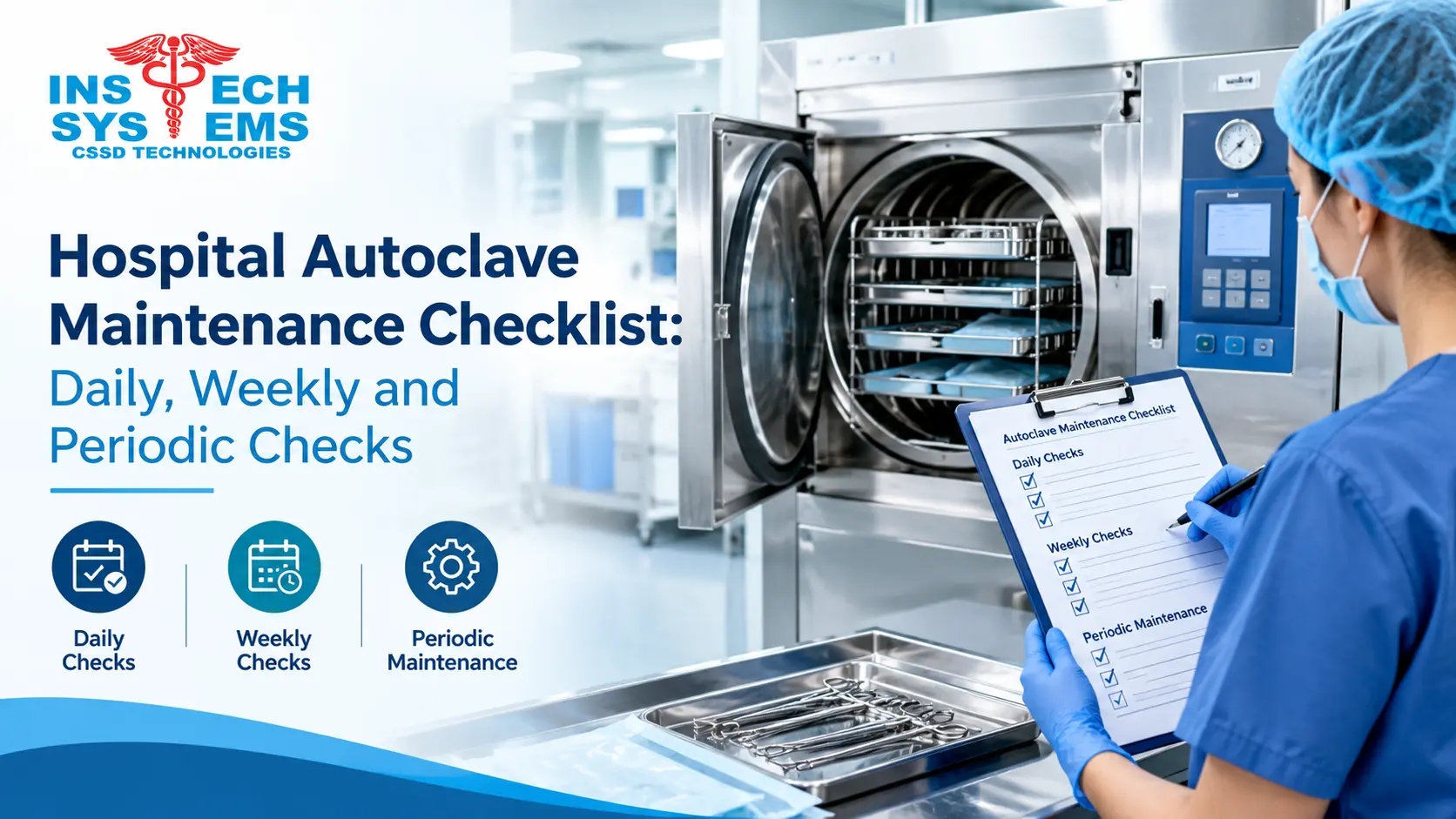
A hospital autoclave plays an important role in sterilizing reusable medical and surgical instruments. It uses controlled steam, temperature, pressure, and exposure time to achieve the required sterilization conditions. However, reliable performance depends on more than selecting the correct cycle. Regular cleaning, inspection, testing, and preventive servicing are also essential.
A well-planned autoclave maintenance checklist helps hospital CSSD teams identify problems early, maintain equipment performance, and reduce unexpected downtime. It also supports consistent sterilization practices and helps protect the instruments being processed.
In this guide, we explain the essential daily, weekly, and periodic maintenance tasks for hospital autoclaves, along with practical cleaning tips and important safety precautions.
Also Read: Medical Instrument Cleaning Before Sterilization: Steps and Best Practices
Daily Autoclave Maintenance Checklist
Daily maintenance should be completed by trained operators according to the equipment manufacturer’s instructions. These checks help identify visible damage, residue, water-quality issues, and operating abnormalities before they affect routine processing.
1. Inspect the Chamber and Door Seal
Check the chamber for visible residue, stains, or unusual deposits. Inspect the door gasket for cracks, deformation, or signs of leakage.
Clean accessible surfaces using a compatible, non-abrasive cleaner and a soft cloth. Do not use steel wool or harsh cleaning agents that could damage the chamber or sealing surfaces.
2. Check the Water Supply and Reservoir
For autoclaves that use a water reservoir, check the water level and quality requirements specified by the manufacturer. Poor-quality water can contribute to mineral deposits, scaling, and equipment problems.
Use the water grade recommended for the particular sterilizer. Do not assume that every model requires the same water type.
3. Inspect the Drain Screen and Accessible Filters
Check the chamber drain screen for lint, debris, or other visible obstructions. Clean it using the method specified in the equipment manual.
A blocked drain can interfere with normal operation and may contribute to wet loads or cycle problems.
4. Review Cycle Parameters and Records
After each cycle, review the available temperature, pressure, and exposure-time records or display.
Confirm that the cycle completed as intended and that the required mechanical and chemical monitoring results are acceptable. A completed cycle display alone does not prove that every item has been sterilized successfully.
Weekly Autoclave Maintenance Checklist
Weekly maintenance involves more thorough cleaning and inspection of accessible components. The exact frequency should follow the manufacturer’s maintenance schedule and the sterilizer’s operating conditions.
1. Clean the Chamber and Trays
Remove trays, racks, or other removable loading accessories as instructed. Clean them with compatible detergent and a soft cloth or sponge.
Perform autoclave cleaning without scratching the chamber surfaces or damaging protective finishes. Rinse and dry components as specified before reinstalling them.
2. Clean the Drain Filter and Chamber Drain
Inspect the drain filter and remove accumulated residue. If the manufacturer’s instructions require flushing the drain line, follow the specified procedure.
Before performing any drain maintenance, ensure the sterilizer is safely shut down, depressurised, and cooled as required. Never open a pressurised or hot chamber to perform cleaning.
3. Inspect the Door Gasket and Sealing Surfaces
Look for cracks, flattening, hardening, or other damage that may affect the seal.
If the gasket is damaged, arrange replacement by authorised personnel. Do not attempt an improvised repair that could compromise the door’s sealing performance.
4. Review Cleaning and Water-Quality Requirements
Check whether the model requires weekly reservoir draining, descaling, filter cleaning, or other specific tasks.
The answer to how to perform weekly maintenance on autoclave equipment is not the same for every model. Some units require chamber cleaning and drain inspection, while others also have specific reservoir, filter, or door-mechanism maintenance procedures.
Monthly and Periodic Autoclave Maintenance
In addition to daily and weekly checks, autoclaves need scheduled technical maintenance. These tasks should be performed at the intervals specified by the manufacturer and by appropriately qualified personnel.
1. Inspect Safety and Operating Components
Qualified service personnel should inspect relevant valves, sensors, pressure gauges, door interlocks, and other safety-related components.
The maintenance schedule may include testing safety valves, checking electrical connections, inspecting steam supply components, and replacing worn parts.
2. Perform Required Calibration and Performance Checks
Temperature and pressure measurement systems should be checked according to the equipment’s service requirements.
Calibration and performance verification help identify deviations that may affect cycle reliability. After major repairs, relocation, or other changes that could affect performance, the sterilizer may require appropriate testing and verification before being returned to routine use.
3. Review Preventive Maintenance Records
Maintain a record of cleaning, inspections, service visits, replacement parts, faults, and corrective actions.
A documented autoclave maintenance programme makes it easier to identify recurring issues and plan preventive servicing.
How Often Should the Autoclave Be Thoroughly Cleaned?
The frequency of thorough cleaning depends on the autoclave model, usage volume, water quality, and the manufacturer’s instructions.
As a practical starting point:
- Daily: Wipe accessible chamber surfaces and the door gasket; check the drain screen and water supply where applicable.
- Weekly: Clean the chamber, trays, and accessible drain components more thoroughly, following the approved cleaning procedure.
- Monthly or at specified intervals: Inspect components and perform any model-specific descaling, filter servicing, or technical checks.
- As required: Arrange additional cleaning or servicing if there is visible residue, scaling, unusual noise, leakage, or a recurring cycle problem.
These are general maintenance categories, not a universal schedule. The manufacturer’s instructions for use (IFU) take precedence, particularly for descaling agents, water requirements, and components that must only be serviced by trained technicians.
Important Sterilization Monitoring and Safety Precautions
Maintenance and sterilization monitoring are related, but they serve different purposes. Cleaning keeps the equipment and its components in suitable condition, while monitoring helps verify that the sterilization process is performing as intended.
Hospital teams should:
- Follow the required mechanical and chemical monitoring procedures for every load.
- Perform biological indicator testing at the frequency required by applicable guidelines and the facility’s policy. CDC guidance recommends biological monitoring at least weekly for steam sterilizers, with every load containing implantable items monitored and held until the results are acceptable whenever feasible.
- Perform the required air-removal test daily for applicable pre-vacuum steam sterilizers.
- Keep maintenance and sterilization records for traceability.
- Stop using equipment when a suspected malfunction or failed sterilization process requires investigation. Follow the facility’s infection-control procedure and obtain qualified technical support before returning the unit to service.
A positive biological indicator or other sterilization failure must be managed through the facility’s established protocol. Simply cleaning the autoclave and restarting it is not sufficient to resolve a confirmed equipment or process problem.
Conclusion
A consistent hospital autoclave maintenance checklist helps keep sterilization equipment clean, reliable, and ready for routine operation. Daily inspections, weekly cleaning, and scheduled technical servicing can help identify problems early and reduce avoidable equipment downtime.
For hospitals and CSSD departments, the most effective approach is to combine autoclave cleaning, preventive maintenance, sterilization monitoring, and proper recordkeeping into one documented programme.
Instech Systems provides sterilization and medical equipment solutions for healthcare facilities. Hospitals planning new CSSD installations, equipment upgrades, or maintenance support should assess their sterilizer requirements, workload, available utilities, and manufacturer-specific servicing needs before finalising a solution.
Frequently Asked Questions
1. How often should an autoclave be cleaned?
Accessible chamber surfaces, the door gasket, and the drain screen may require daily attention, while more thorough chamber and tray cleaning is often scheduled weekly. Always follow the model-specific instructions.
2. How to perform weekly maintenance on autoclave equipment?
A typical weekly routine includes cleaning the chamber and removable trays, inspecting the drain filter, checking the door gasket, and completing any reservoir or filter maintenance specified by the manufacturer.
3. What happens if autoclave maintenance is neglected?
Residue, mineral scaling, blocked drains, damaged seals, and worn components may contribute to equipment faults, cycle interruptions, or inconsistent performance.
4. Does cleaning an autoclave guarantee sterilization?
No. Cleaning removes residue and helps maintain equipment condition, but sterilization also depends on correct cycle selection, proper instrument preparation, loading, and required monitoring.
5. Who should perform autoclave maintenance?
Trained operators can complete routine cleaning and inspections permitted by the manufacturer. Repairs, calibration, safety-component servicing, and other technical maintenance should be performed by qualified personnel.
Pingback: Surgical Instrument Inspection and Assembly in CSSD