Proper cleaning of medical instruments is one of the most important steps in preventing cross-contamination and maintaining patient safety in hospitals, clinics, dental centres, and surgical facilities. Reusable surgical instruments can carry blood, tissue residues, body fluids, and other contaminants after use. If these contaminants are not removed effectively, they may interfere with subsequent disinfection or sterilization processes.
Medical instrument cleaning before sterilization involves removing visible soil and other residues from reusable devices before they undergo the appropriate reprocessing procedure. Hospitals can improve this process by following standardized cleaning protocols, using compatible cleaning solutions, and selecting suitable equipment.
In this guide, we will explain the steps involved in cleaning medical instruments, the best practices healthcare facilities should follow, and how choosing the right equipment from Instech Systems can support an efficient instrument-reprocessing workflow.
Why Is Medical Instrument Cleaning Important Before Sterilization?
Cleaning removes organic and inorganic contaminants that may remain on instruments after medical procedures. Blood, tissue, and dried debris can become difficult to remove if instruments are left unprocessed for too long.
Effective cleaning is necessary because residual soil can interfere with the effectiveness of subsequent disinfection and sterilization. Even advanced sterilization equipment cannot compensate for inadequate cleaning.
The decontamination of surgical instruments should therefore follow a defined procedure that includes safe handling, appropriate cleaning, rinsing, drying, and inspection before the next stage of reprocessing.
Proper cleaning also helps protect healthcare workers from exposure to potentially infectious material and supports the durability and functionality of reusable medical devices.
Also Read: Ultrasonic Cleaner for Surgical Instruments: How It Works and When to Use It
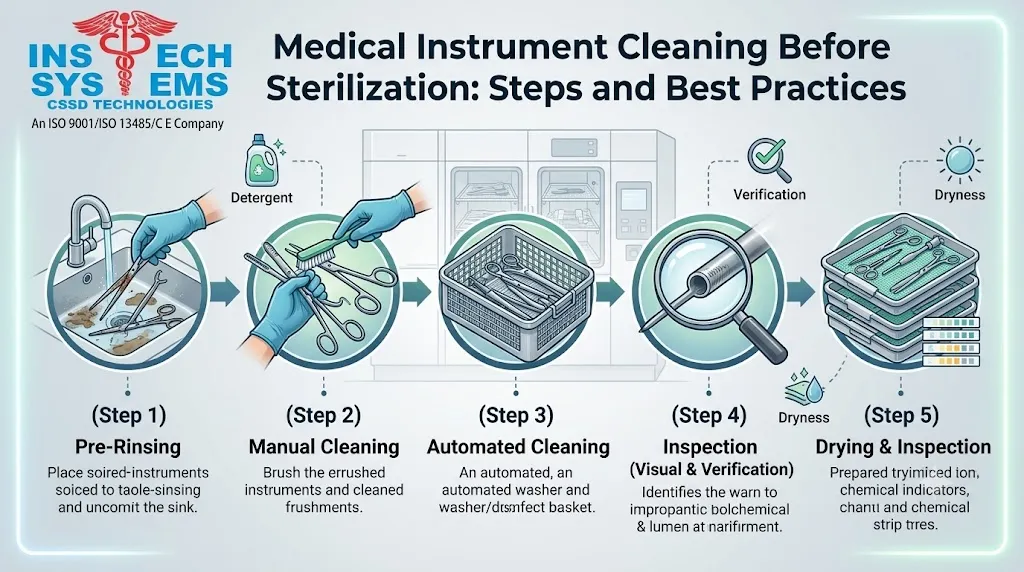
Step-by-Step Process for Cleaning Medical Instruments Before Sterilization
Healthcare facilities should establish a standardized process based on the instrument manufacturer’s instructions, equipment requirements, and applicable infection prevention guidelines.
1. Collect and Transport Used Instruments Safely
After a medical procedure, used instruments should be collected carefully and transported to the designated decontamination area in appropriate, secure containers. Staff should wear the recommended personal protective equipment, including suitable gloves, protective clothing, and eye or face protection where required.
Used instruments should be handled in a way that minimizes splashes, accidental injuries, and exposure to contaminated materials. Sharp instruments require particular care during collection and transportation.
Follow the facility’s approved procedures for managing contaminated instruments and preventing the spread of microorganisms between clean and dirty areas.
2. Prepare Instruments for Cleaning
Before cleaning, inspect the instruments and prepare them according to their manufacturer’s instructions. Hinged instruments may need to be opened, while compatible devices that can be disassembled should be separated as directed.
Preparing instruments correctly helps expose surfaces where blood and debris may accumulate. Instruments should not be overcrowded during processing because this can prevent the cleaning solution from reaching all required areas.
Avoid using cleaning techniques or tools that could damage delicate surfaces, cutting edges, coatings, or specialized components.
3. Select the Appropriate Cleaning Method
The appropriate method depends on the instrument’s design, the manufacturer’s instructions, the level of contamination, and the available equipment.
Common methods include:
- Manual cleaning: Uses a compatible detergent, water, and suitable brushes to remove contaminants from instruments.
- Ultrasonic cleaning: Uses high-frequency sound waves to create cavitation in a cleaning solution, helping loosen debris from compatible instruments with joints, grooves, and intricate surfaces.
- Automated washer-disinfector cleaning: Uses controlled cleaning cycles to process compatible instruments according to the machine’s validated operating requirements.
A surgical equipment cleaner should be selected according to the instruments being processed and the requirements of the facility. Some devices are not suitable for ultrasonic cleaning or particular automated cycles, so manufacturer instructions must always be checked.
4. Use the Correct Cleaning Solution
Cleaning solutions are selected according to the instrument type, material, and approved reprocessing procedure. Medical-grade detergents formulated for instrument cleaning are generally preferred over household cleaning products.
The detergent concentration, water quality, temperature, and contact time should follow the product manufacturer’s instructions. Incorrect concentrations or unsuitable chemicals may damage instruments, leave residues, or reduce cleaning effectiveness.
Enzymatic detergents may be appropriate for certain types of organic soil, but they must be used according to their specific instructions. Cleaning agents should never be mixed unless the manufacturers explicitly permit it.
5. Perform Thorough Instrument Cleaning
During manual cleaning, compatible brushes should be used to clean hinges, serrations, joints, and other areas where contaminants may remain. Brushing should be performed in a manner that minimizes splashing and protects staff from exposure.
For ultrasonic cleaning, instruments must be loaded correctly, and the cleaning solution, temperature, and cycle duration must meet the equipment and instrument manufacturers’ requirements.
When using an automated surgical tool cleaner, staff should verify that instruments are positioned correctly and that the selected cycle is suitable for the load. Equipment operation should follow the established procedure rather than relying on an arbitrary cycle time.
6. Rinse Instruments Properly
After cleaning, instruments should be rinsed according to the validated procedure to remove loosened debris and detergent residues. The appropriate water quality depends on the instrument, cleaning method, and manufacturer’s instructions.
Insufficient rinsing may leave chemical residues on surfaces, while unsuitable water may contribute to deposits or staining. Particular attention should be given to channels, joints, and other areas where cleaning solution can remain trapped.
7. Dry and Inspect the Instruments
Following rinsing, instruments should be dried using a method compatible with the device and the approved procedure. Moisture remaining in joints or channels may affect subsequent processing or contribute to corrosion in susceptible materials.
Every instrument should then be inspected under suitable lighting for visible soil, damage, corrosion, and functional problems. Magnification may be useful for instruments with intricate surfaces.
If an instrument is still contaminated, it should undergo the required cleaning process again. Damaged instruments should be removed from service and assessed according to the facility’s maintenance procedure.
8. Proceed to the Appropriate Sterilization Process
Once cleaning, rinsing, drying, and inspection are complete, instruments should proceed through the remaining required reprocessing stages. These may include preparation, packaging, and sterilization, depending on the device and its intended use.
The appropriate sterilization method must be selected according to the manufacturer’s instructions and the healthcare facility’s validated procedures.
Best Practices for Cleaning Medical Equipment
Following consistent procedures can help improve cleaning quality and reduce avoidable errors.
Follow Manufacturer Instructions
Always consult the instructions for use supplied with the instrument, detergent, and cleaning equipment. Different materials and device designs may require different methods and operating parameters.
Process Instruments Promptly
Dried blood and other residues can become harder to remove over time. Follow approved procedures for keeping instruments appropriately moist or containing them before cleaning, without allowing them to remain in unsuitable solutions.
Train Healthcare Staff
Personnel responsible for cleaning medical equipment should receive training in safe handling, cleaning techniques, chemical use, equipment operation, and contamination prevention. Training should be reinforced through regular competency assessments.
Maintain Cleaning Equipment
Cleaning equipment should be inspected, cleaned, and maintained according to the manufacturer’s schedule. Routine checks should include the condition of tanks, filters, spray arms, baskets, drainage systems, and other applicable components.
Establish Clear Workflow Separation
Where practical, contaminated instruments should move through designated dirty-to-clean workflows. This reduces the risk of recontamination and helps staff maintain consistent processing practices.
Document and Monitor the Process
Facilities should maintain appropriate records of equipment maintenance, staff training, cleaning-cycle monitoring, and corrective actions. The type and frequency of monitoring should follow the applicable standards and the facility’s validated procedures.
How to Choose the Right Surgical Instrument Cleaning Equipment
Selecting suitable equipment is important for healthcare facilities handling different instrument types and processing volumes.
When evaluating a surgical tool cleaner or other instrument-cleaning system, consider the following factors:
- Processing capacity: Choose equipment that accommodates the size and quantity of instruments processed during a typical workload.
- Instrument compatibility: Confirm that the equipment can safely process the devices used by the facility.
- Cleaning performance: Review the available cleaning methods, cycle controls, loading arrangements, and manufacturer documentation.
- Ease of operation: Clear controls and practical loading arrangements can help staff follow established procedures consistently.
- Maintenance requirements: Consider routine servicing, spare parts, technical assistance, and the availability of operating guidance.
- Workflow integration: The equipment should fit the available space and support the facility’s overall decontamination process.
For larger hospitals and specialized healthcare facilities, automated cleaning systems may help standardize routine processing. Ultrasonic cleaners can also be useful for compatible instruments with intricate surfaces. The best solution depends on the actual workload, device requirements, and validated reprocessing procedure.
Why Choose Instech Systems for Medical Instrument Cleaning Equipment?
Healthcare facilities require reliable equipment to support safe and efficient instrument reprocessing. Instech Systems can be approached to discuss equipment options based on the facility’s cleaning requirements, instrument compatibility, and workflow.
Before purchasing, healthcare administrators and procurement teams should review the available models, tank or chamber capacity, operating specifications, maintenance requirements, and technical support options.
Choosing the right equipment involves more than comparing prices. Facilities should ensure that the selected system is appropriate for their instruments and can be integrated into a documented, validated cleaning process.
Contact Instech Systems to enquire about available medical instrument cleaning equipment and discuss a suitable solution for your healthcare facility.
Frequently Asked Questions
1. Why must medical instruments be cleaned before sterilization?
Cleaning removes blood, tissue, and other contaminants that may interfere with subsequent sterilization. Instruments should be cleaned thoroughly before proceeding through the required reprocessing stages.
2. What is the best method for cleaning surgical instruments?
The best method depends on the instrument manufacturer’s instructions, device design, and level of contamination. Manual cleaning, ultrasonic cleaning, and automated washer-disinfector systems may be appropriate for different devices.
3. Can an ultrasonic cleaner sterilize surgical instruments?
No. Ultrasonic cleaning helps remove contaminants but does not replace a validated sterilization process. Instruments requiring sterilization must undergo an appropriate method after cleaning and the other required preparation steps.
4. How often should medical cleaning equipment be maintained?
Maintenance frequency depends on the equipment model and manufacturer’s recommendations. Routine inspection, cleaning, servicing, and performance checks should follow the facility’s established maintenance schedule.
5. How can hospitals improve the cleaning of medical equipment?
Hospitals can improve cleaning by following standardized procedures, processing instruments promptly, using compatible detergents, training staff, maintaining equipment, and inspecting instruments before further processing.
Conclusion
Medical instrument cleaning before sterilization is a fundamental part of safe healthcare instrument reprocessing. From secure collection and appropriate cleaning to rinsing, drying, and inspection, every stage contributes to the quality of the overall process.
By following manufacturer instructions, training staff, maintaining equipment, and selecting suitable cleaning methods, healthcare facilities can improve workflow consistency and reduce the risk of inadequate instrument processing.
For hospitals, clinics, and surgical centres looking to strengthen their cleaning workflow, Instech Systems can help explore suitable medical instrument cleaning equipment based on the facility’s requirements.
Pingback: Hospital Autoclave Maintenance Checklist: Daily & Weekly