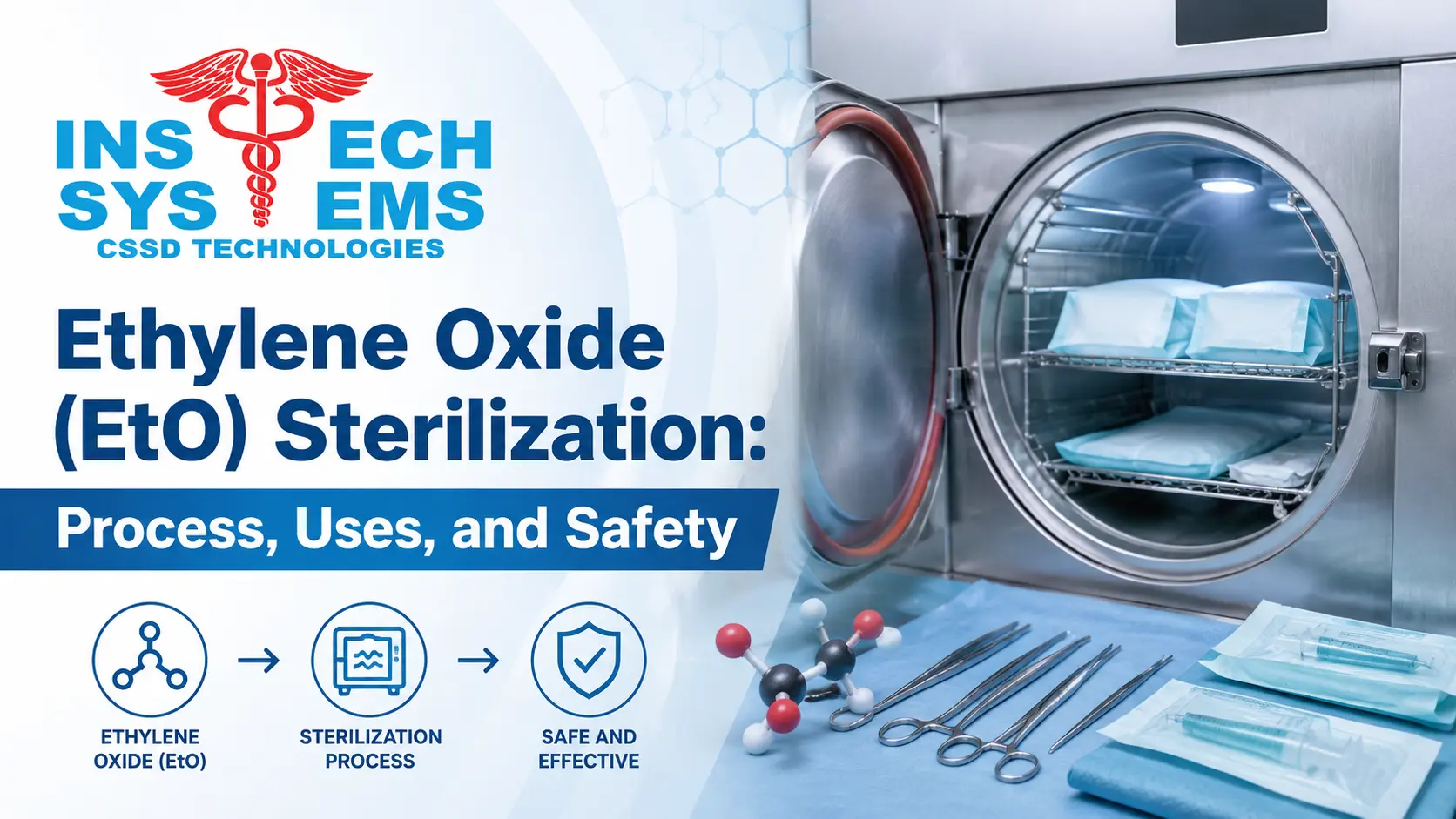
Sterilization is one of the most critical processes in the healthcare and medical device industry. It ensures that medical instruments, surgical tools, pharmaceutical products, and healthcare equipment remain free from harmful microorganisms. Among the various sterilization methods available today, Ethylene Oxide (EtO) Sterilization is widely recognized for its ability to sterilize heat-sensitive and moisture-sensitive products effectively.
Because many modern medical devices contain plastic, rubber, electronics, and other delicate materials, traditional steam sterilization may not always be suitable. This is where EtO sterilization becomes an ideal solution. Its ability to penetrate complex device structures and packaging makes it one of the most reliable sterilization methods used worldwide.
In this blog, we will explore the complete ethylene oxide sterilization process, its applications, advantages, and essential safety considerations.
What is Ethylene Oxide (EtO) Sterilization?
Ethylene oxide sterilization is a low-temperature sterilization process that uses ethylene oxide gas to eliminate bacteria, viruses, fungi, and other microorganisms from medical products and equipment.
Ethylene oxide is a colorless gas capable of penetrating packaging materials and complex device geometries. This makes it particularly useful for sterilizing products that cannot withstand high temperatures or moisture.
Today, EtO sterilization is extensively used in:
- Hospitals
- Medical device manufacturing facilities
- Pharmaceutical industries
- Research laboratories
- Healthcare institutions
It remains one of the most effective methods for sterilizing sensitive medical products without causing damage to materials.
Read more about ETP Sterlizer Process
Why is EtO Sterilization Important?
Many medical products contain materials that may deform, melt, or lose functionality when exposed to steam or high temperatures.
Examples include:
- Plastic syringes
- Catheters
- Disposable medical kits
- Electronic medical devices
- Surgical drapes
- Wound care products
For such applications, ethylene oxide sterilization provides a safe and reliable sterilization solution while maintaining product integrity.
How Does Ethylene Oxide Sterilization Work?
The sterilization process involves several carefully controlled stages designed to achieve complete microbial destruction while ensuring product safety.
1. Preconditioning
The products are first placed in a controlled environment where temperature and humidity levels are adjusted. This stage helps prepare microorganisms for effective sterilization by making them more susceptible to ethylene oxide gas.
Key objectives include:
- Temperature stabilization
- Moisture conditioning
- Improved gas penetration
Proper preconditioning significantly enhances sterilization efficiency.
2. Loading the Sterilization Chamber
Once preconditioning is complete, products are loaded into the sterilization chamber.
Special care is taken to ensure:
- Proper airflow
- Uniform gas distribution
- Adequate spacing between products
Correct loading is essential for achieving consistent sterilization results throughout the chamber.
3. Gas Injection
Ethylene oxide gas is introduced into the sterilization chamber under controlled conditions.
Several parameters are monitored:
- Gas concentration
- Temperature
- Humidity
- Exposure time
The gas penetrates packaging materials and reaches all product surfaces, including difficult-to-access areas.
4. Exposure Phase
During this stage, the products remain exposed to ethylene oxide gas for a specified duration. The gas destroys microorganisms by disrupting their DNA and preventing reproduction. This phase is critical because it ensures complete sterilization of all surfaces and internal product components.
5. Gas Removal
After sterilization is completed, the ethylene oxide gas is evacuated from the chamber using vacuum and ventilation systems. This helps reduce residual gas levels before the aeration stage begins.
6. Aeration Process
Aeration is one of the most important stages of EtO sterilization.
During aeration:
- Residual gas is removed from products
- Product safety is ensured
- Regulatory requirements are met
Depending on the product type, aeration may take several hours or even days. This step ensures that sterilized products are safe for patient use.
Application of Ethylene Oxide Sterilization
One of the main reasons for the popularity of ethylene oxide sterilization is its versatility. It can sterilize a wide variety of products that are difficult to process using other sterilization methods.
Medical Devices
Medical device manufacturers rely heavily on EtO sterilization for products that cannot tolerate high temperatures.
Examples include:
- Catheters
- IV sets
- Cannulas
- Surgical kits
- Blood collection devices
The ability of EtO gas to penetrate narrow lumens and complex structures makes it highly effective for these products.
Disposable Healthcare Products
Many single-use healthcare products require sterilization before packaging and distribution.
Examples include:
- Syringes
- Surgical gloves
- Wound dressings
- Disposable masks
- Medical tubing
EtO sterilization ensures these products remain sterile until use.
Pharmaceutical Packaging
Pharmaceutical industries use ethylene oxide sterilization for packaging materials and certain sensitive products.
Applications include:
- Packaging components
- Drug delivery systems
- Specialized containers
Electronic Medical Equipment
Many modern medical devices contain sensitive electronic components that cannot be exposed to steam sterilization.
Examples include:
- Diagnostic devices
- Monitoring equipment
- Sensor-based medical instruments
EtO sterilization allows these devices to be sterilized without damage.
Laboratory and Research Equipment
Research facilities use EtO sterilization for:
- Laboratory instruments
- Sample collection devices
- Specialized testing equipment
Its low-temperature operation makes it suitable for delicate materials.
Safety Considerations in EtO Sterilization
While EtO sterilization offers excellent sterilization effectiveness, safety management is extremely important because ethylene oxide gas requires careful handling.
Operator Safety
Ethylene oxide gas must be handled in controlled environments using properly designed sterilization systems.
Facilities should implement:
- Gas monitoring systems
- Leak detection equipment
- Emergency response procedures
- Adequate ventilation systems
Proper operator training is essential for safe operations.
Personal Protective Equipment (PPE)
Personnel working around sterilization equipment should use appropriate PPE such as:
- Safety gloves
- Protective eyewear
- Respiratory protection (where required)
- Protective clothing
These measures help minimize occupational exposure.
Chamber Integrity and Leak Prevention
Modern EtO sterilizers are equipped with advanced safety systems to prevent gas leakage.
Routine inspection and maintenance help ensure:
- Safe operation
- Regulatory compliance
- Equipment reliability
Importance of Aeration
Aeration plays a critical role in product safety. Insufficient aeration can leave residual ethylene oxide on sterilized products.
Proper aeration helps:
- Remove residual gas
- Improve patient safety
- Meet international standards
Environmental Safety
Modern sterilization facilities utilize emission control systems to reduce environmental impact.
These systems help manage:
- Gas emissions
- Air quality compliance
- Workplace safety standards
Environmental responsibility is becoming increasingly important in sterilization operations worldwide.
Compliance with International Standards
EtO sterilization facilities typically follow internationally recognized standards and validation protocols.
Compliance helps ensure:
- Consistent sterilization effectiveness
- Product safety
- Regulatory approval
- Process reliability
Validated sterilization cycles are essential for maintaining healthcare quality standards.
Advantages of Ethylene Oxide Sterilization
There are several reasons why healthcare manufacturers continue to use EtO sterilization.
Excellent Material Compatibility
Suitable for:
- Plastics
- Rubber
- Electronics
- Composite materials
Deep Penetration Capability
Gas can penetrate:
- Packaging materials
- Long lumens
- Complex device structures
Low-Temperature Process
Ideal for heat-sensitive products.
Reliable Sterility Assurance
Provides highly effective microbial elimination when properly validated.
Suitable for Pre-Packaged Products
Products can often be sterilized within their final packaging, reducing contamination risks.
Why Choose Intech Systems?
Intech Systems specializes in advanced sterilization solutions designed to meet the demanding requirements of healthcare and medical device industries. Our sterilization systems are engineered to deliver reliable performance, operational safety, process efficiency, and compliance with industry standards.
With a strong focus on innovation, quality, and customer satisfaction, Intech Systems provides sterilization technologies that help organizations maintain the highest levels of product safety and sterility assurance.
Conclusion
Ethylene Oxide (EtO) Sterilization remains one of the most effective methods for sterilizing heat-sensitive and complex medical products. Its ability to penetrate packaging materials and intricate device structures makes it indispensable in the healthcare and medical device industries.
From catheters and surgical kits to pharmaceutical packaging and electronic medical equipment, ethylene oxide sterilization supports a wide range of critical applications. However, successful implementation requires strict attention to safety, proper aeration, operator protection, and regulatory compliance. As healthcare technologies continue to evolve, EtO sterilization will remain a vital solution for ensuring safe, sterile, and reliable medical products for patients worldwide.