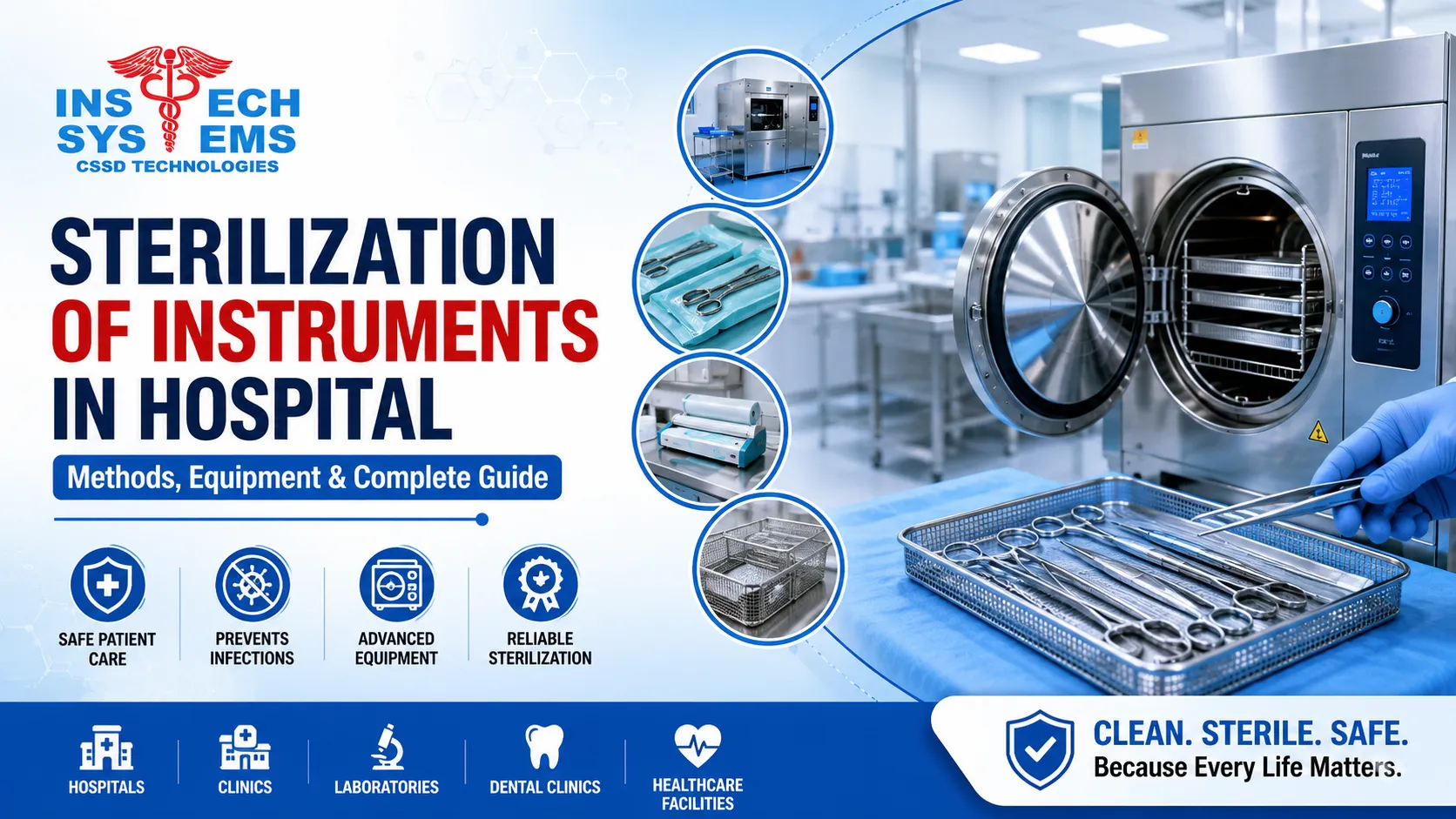
Sterilization is one of the most important processes in any hospital, clinic, laboratory, or healthcare facility. Surgical instruments and reusable medical devices come into contact with patients, body tissues, blood, and other biological materials. If these instruments are not properly processed before reuse, microorganisms can remain on their surfaces and create a serious risk of healthcare-associated infections.
This is why sterilization of instruments in hospital settings is carried out through controlled cleaning, disinfection, sterilization, inspection, packaging, and storage procedures. Modern healthcare facilities use specialized equipment to make this process reliable, repeatable, and safe.
In this complete guide, we will explain sterilization in the hospital, common sterilization methods, the role of a medical equipment sterilizer, and how hospitals can select suitable sterilization equipment.
What is Sterilization in the Hospital?
Sterilization is a validated process designed to eliminate all forms of viable microorganisms from a product, including bacteria, viruses, fungi, and bacterial spores.
It is important to understand that cleaning, disinfection, and sterilization are not the same thing. Cleaning removes visible soil and organic material from an instrument. Disinfection reduces or eliminates many pathogenic microorganisms, while sterilization is a much more comprehensive process intended for items that require sterility before use.
The exact method depends on the instrument’s material, design, heat tolerance, and intended application. A hospital should always follow validated procedures, manufacturer instructions, and applicable infection-control requirements.
Also Read: How to Clean Surgical Instruments Properly: A Complete Guide for Healthcare Facilities
Why is Sterilization of Instruments in Hospital Important?
Reusable medical instruments must be processed carefully because contaminated equipment can transfer microorganisms from one patient to another. Proper sterilization forms an essential part of infection prevention and patient safety.
The process is particularly important for instruments that enter sterile body tissues or the vascular system. Surgical instruments, certain dental instruments, implants, and other critical medical devices require appropriate sterilization before use.
Effective sterilization also protects healthcare workers who handle instruments during preparation and reuse. A well-organized sterilization system therefore contributes to safer clinical procedures and more efficient hospital operations.
Main Steps in Hospital Instrument Sterilization
Sterilization of instruments in hospital is not limited to placing instruments inside a sterilizer. It is a complete workflow in which every stage has an important role.
1. Collection and Safe Transportation
Used instruments should be collected and transported from the point of use to the designated reprocessing area using appropriate containers and safety procedures. This reduces unnecessary exposure and helps prevent contamination of other areas.
2. Cleaning
Cleaning is a critical step because blood, tissue, chemicals, and other residues can interfere with the effectiveness of subsequent disinfection or sterilization.
Depending on the instrument, cleaning may involve manual methods, ultrasonic cleaning, or automated washer-disinfectors. Instruments should be cleaned according to their manufacturer’s instructions.
3. Inspection and Preparation
After cleaning, instruments are inspected for remaining soil, damage, corrosion, or functional problems. Hinged instruments may need to be opened appropriately so that the sterilizing agent can reach relevant surfaces.
4. Packaging
Clean instruments intended for storage after sterilization are packaged using suitable sterilization pouches, wraps, containers, or other validated systems. Packaging allows the sterilizing agent to reach the instrument while maintaining sterility afterward when handled and stored correctly.
5. Sterilization
The prepared instruments are then processed using a validated sterilization method suitable for the particular device.
6. Storage and Distribution
After successful processing, sterile packs should be handled carefully and stored in a suitable environment. Packaging integrity should be maintained until the instrument is required for use.
Common Methods of Sterilization
Different types of sterilizers hospital facilities use depend on the nature of the instruments and the requirements of the healthcare facility.
Steam Sterilization
Steam sterilization, commonly performed using an autoclave, is one of the most widely used methods for heat- and moisture-stable medical instruments.
The process uses saturated steam under pressure to achieve the required sterilization conditions. It is commonly used for surgical instruments, certain laboratory items, textiles, and other compatible products. Modern steam sterilizers may include automatic controls, monitoring systems, vacuum functions, safety features, and programmable cycles.
Dry Heat Sterilization
Dry heat sterilization uses high-temperature air for a controlled period. It can be suitable for selected heat-resistant materials and products that may not be compatible with moisture.
The process generally requires higher temperatures and longer exposure than steam sterilization, so it should only be used when appropriate for the device and according to validated procedures.
Low-Temperature Sterilization
Some modern medical instruments contain heat-sensitive materials, electronics, plastics, or complex designs that cannot tolerate conventional steam sterilization.
For these devices, validated low-temperature technologies may be used. Examples include hydrogen peroxide-based systems and other specialized methods. The appropriate technology depends on the device manufacturer’s instructions and the healthcare facility’s validated process.
Chemical Sterilization
Certain heat-sensitive devices may be processed using chemical sterilants. However, chemical sterilization requires careful control of concentration, exposure conditions, compatibility, ventilation, and worker safety.
Because different chemicals have different characteristics, healthcare facilities should follow the sterilant manufacturer’s instructions and applicable regulations.
What is a Medical Equipment Sterilizer?
A medical equipment sterilizer is specialized equipment designed to process reusable medical devices using a validated sterilization cycle.
The equipment may use steam, dry heat, or an appropriate low-temperature technology depending on the application. Modern systems are designed to provide controlled temperature, pressure, time, and other parameters necessary for the selected cycle.
Advanced sterilizers can also feature digital controls, automatic cycle management, alarms, data recording, safety interlocks, and monitoring systems. These features make it easier for healthcare professionals to operate the equipment consistently and maintain appropriate documentation.
Role of CSSD in Hospital Sterilization
A Central Sterile Services Department, commonly known as CSSD, plays an important role in the centralized reprocessing of reusable medical instruments.
A properly planned CSSD generally separates contaminated and clean activities to reduce the possibility of cross-contamination. Instruments move through defined stages such as receiving, cleaning, inspection, assembly, packaging, sterilization, sterile storage, and distribution.
The use of suitable sterilization equipment and a well-designed workflow helps hospitals maintain consistency across large volumes of instruments.
How to Choose the Right Sterilizer for a Hospital?
Choosing a sterilizer should be based on the hospital’s actual requirements rather than simply selecting the largest or most advanced machine. Consider the type and volume of instruments being processed, available space, required cycle capacity, instrument compatibility, utility requirements, automation level, monitoring features, maintenance support, and applicable standards.
For example, a hospital with a high volume of heat-resistant surgical instruments may require efficient steam sterilization capacity, while facilities handling specialized heat-sensitive devices may need additional low-temperature processing technology. Working with an experienced manufacturer can help healthcare facilities determine the appropriate equipment configuration and workflow.
Why Choose Instech Systems?
For healthcare facilities, sterilization equipment is a long-term investment where reliability, safety, engineering quality, and technical support matter.
Instech Systems provides sterilization and healthcare equipment solutions designed to meet the demanding requirements of hospitals, clinics, laboratories, and other healthcare environments. The company focuses on practical equipment solutions, dependable operation, quality engineering, and customer-oriented support.
From selecting suitable sterilization equipment to installation and after-sales assistance, Instech Systems can help healthcare facilities develop an efficient approach to medical instrument reprocessing.
Whether you are upgrading an existing CSSD, setting up a new hospital, or expanding your instrument processing capacity, selecting equipment according to your workflow and sterilization requirements can make a significant difference to operational efficiency.
Conclusion
Sterilization of instruments in hospital is a complete and carefully controlled process rather than a single equipment operation. Cleaning, inspection, packaging, sterilization, monitoring, storage, and safe handling all contribute to effective instrument reprocessing.
Steam sterilization remains an important option for compatible heat- and moisture-stable instruments, while dry heat and low-temperature technologies may be appropriate for specific applications. The right medical equipment sterilizer should always be selected according to the type of devices being processed, validated procedures, manufacturer’s instructions, and healthcare facility requirements.
With reliable equipment, trained personnel, proper workflow, and appropriate monitoring, hospitals can build an effective sterilization system that supports patient safety and efficient clinical operations. Instech Systems can serve as a professional partner for healthcare facilities looking for dependable sterilization equipment and solutions.