
In modern healthcare, patient safety and infection control are top priorities. Every hospital, whether small or large, depends on proper sterilization of medical instruments to prevent infections. This critical responsibility is handled by a specialized department known as CSSD. In this blog, INSTECH SYSTEMS explains what is CSSD in a hospital, its role, workflow, equipment used, and an overview of CSSD charges in a hospital, helping healthcare professionals and decision-makers understand its importance clearly.
What is CSSD in Hospital?
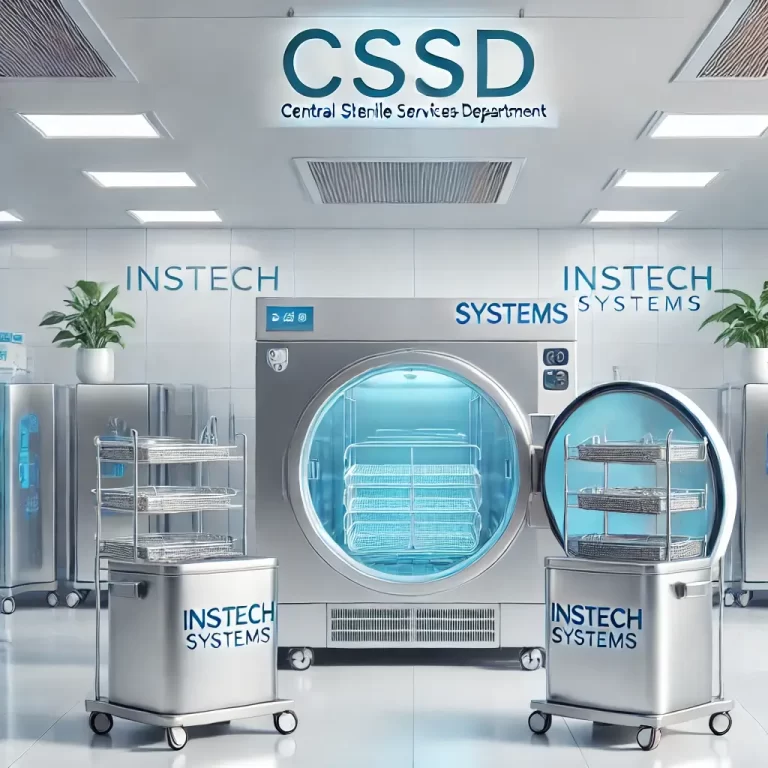
CSSD stands for Central Sterile Services Department. It is a centralized unit in a hospital responsible for cleaning, disinfecting, sterilizing, packing, and distributing reusable medical instruments and equipment. The main purpose of CSSD is to ensure that all surgical and medical instruments used in patient care are free from bacteria, viruses, fungi, and other harmful microorganisms. This helps reduce hospital-acquired infections (HAIs) and improves overall treatment quality. In simple words, CSSD works behind the scenes to make sure every instrument used on a patient is safe and sterile.
Full Form and Meaning of CSSD
- CSSD Full Form: Central Sterile Services Department
- CSSD Meaning: A hospital department that manages the complete sterilization lifecycle of medical instruments.
CSSD is often called the backbone of infection control in hospitals.
Click on this link to Read more about Full Form of CSSD and CSSD Diagram
Role of CSSD Department in Hospital
Understanding what is CSSD in hospital is incomplete without knowing its role. The CSSD department performs several critical functions:
- Infection Control- By sterilizing instruments, CSSD prevents cross-contamination and hospital-acquired infections.
- Centralized Sterilization- Instead of individual departments sterilizing instruments separately, CSSD ensures a standardized and controlled process.
- Support to OT and ICU- Operation theatres and ICUs depend heavily on CSSD for sterile surgical tools.
- Compliance with Healthcare Standards- CSSD helps hospitals meet national and international healthcare quality standards.
CSSD Workflow in Hospital
The CSSD process follows a strict and systematic workflow:
- Collection of Used Instruments- After use, instruments from OT, wards, ICU, and clinics are collected and transported to CSSD.
- Cleaning and Decontamination– Instruments are cleaned to remove blood, tissue, and organic matter before sterilization.
- Inspection and Assembly- Each instrument is checked for damage and assembled into sets.
- Packing and Labeling- Sterile packaging ensures instruments remain contamination-free until use.
- Sterilization- Instruments are sterilized using appropriate methods based on material type.
- Storage and Distribution- Sterilized instruments are stored safely and supplied back to hospital departments.
Hospital CSSD Equipment Used for Sterilization
The effectiveness of CSSD depends heavily on the quality of hospital CSSD equipment. Common equipment used in CSSD includes:
- Steam Sterilizer / Autoclave- Used for metal instruments that can withstand high temperature and pressure.
- ETO Sterilizer (Ethylene Oxide)- Ideal for heat-sensitive instruments such as plastic, electronic, and delicate medical devices.
- Plasma Sterilizer- Uses hydrogen peroxide plasma for low-temperature sterilization.
- Washer Disinfector- Automated machines for washing and disinfecting instruments.
- Ultrasonic Cleaner- Removes microscopic debris from surgical instruments.
- Packing and Sealing Machines- Ensures instruments remain sterile after processing.
INSTECH SYSTEMS provides advanced hospital CSSD equipment designed to meet modern hospital requirements with high reliability and safety.
Importance of CSSD in Hospital Infection Control
CSSD plays a vital role in maintaining a safe hospital environment:
- Reduces surgical site infections
- Protects patients, doctors, and staff
- Ensures safe reuse of medical instruments
- Improves hospital reputation and trust
- Supports accreditation and quality audits
Without an efficient CSSD department, even the best medical treatments can become risky.
CSSD Charges in Hospital: What Do They Include?
Many patients and healthcare administrators often ask about CSSD charges in hospital. These charges are not always shown separately but are included in overall treatment or procedure costs. Factors Affecting CSSD Charges in Hospital
Type of procedure (surgery, diagnostic, minor procedure)
- Number of instruments used
- Sterilization method (steam, ETO, plasma)
- Frequency of instrument usage
- Hospital infrastructure and technology
Why CSSD Charges Are Important?
CSSD charges help hospitals recover the cost of:
- Advanced sterilization equipment
- Consumables and packaging materials
- Skilled staff and maintenance
- Quality control and validation processes
Though CSSD charges in hospital add to operational costs, they are essential for patient safety and quality healthcare.
Difference Between CSSD and OT Sterilization
| Aspect | CSSD | OT Sterilization |
|---|---|---|
| Location | Centralized department | Limited to OT |
| Process Control | High | Moderate |
| Equipment | Advanced & multiple | Limited |
| Infection Risk | Low | Higher |
| Efficiency | High | Lower |
Centralized CSSD offers better infection control and operational efficiency compared to decentralized sterilization.
Why Hospitals Are Upgrading Their CSSD Departments?
Modern hospitals are investing in advanced CSSD systems because:
- Patient awareness about hygiene is increasing
- Accreditation standards are becoming stricter
- Advanced surgeries require precise sterilization
- Automation reduces human error
A well-equipped CSSD ensures smooth hospital operations and better patient outcomes.
Why Choose INSTECH SYSTEMS for Hospital CSSD Equipment?
INSTECH SYSTEMS is a trusted name in providing reliable and advanced sterilization solutions for healthcare facilities. Our strengths include:
- High-quality hospital CSSD equipment
- Advanced ETO sterilizers and systems
- Compliance with healthcare safety standards
- Custom solutions for small to large hospitals
- Strong technical support and service
We help hospitals build efficient CSSD departments that meet modern healthcare challenges.
Conclusion
Understanding what is CSSD in hospital is essential for ensuring patient safety, infection control, and quality healthcare delivery. CSSD acts as the backbone of hospital sterilization, supporting every clinical department. With the right hospital CSSD equipment and a clear understanding of CSSD charges in hospital, healthcare facilities can maintain high standards of hygiene and operational efficiency. INSTECH SYSTEMS continues to support hospitals with advanced CSSD solutions, helping create safer and healthier medical environments.