Sterilization is an essential part of many medical, pharmaceutical, laboratory, and healthcare processes. Products that cannot tolerate high temperatures or moisture often require a different sterilization approach. This is where ethylene oxide (ETO) sterilization becomes useful. It provides an effective way to sterilize a wide range of heat-sensitive products without exposing them to the high temperatures used in conventional steam sterilization.
An ethylene oxide sterilization chamber is specially designed to provide controlled conditions for the sterilization cycle. Instech Systems develops sterilization solutions with a focus on controlled operation, dependable performance, and practical industrial requirements.
What Is an ETO Sterilization Chamber?
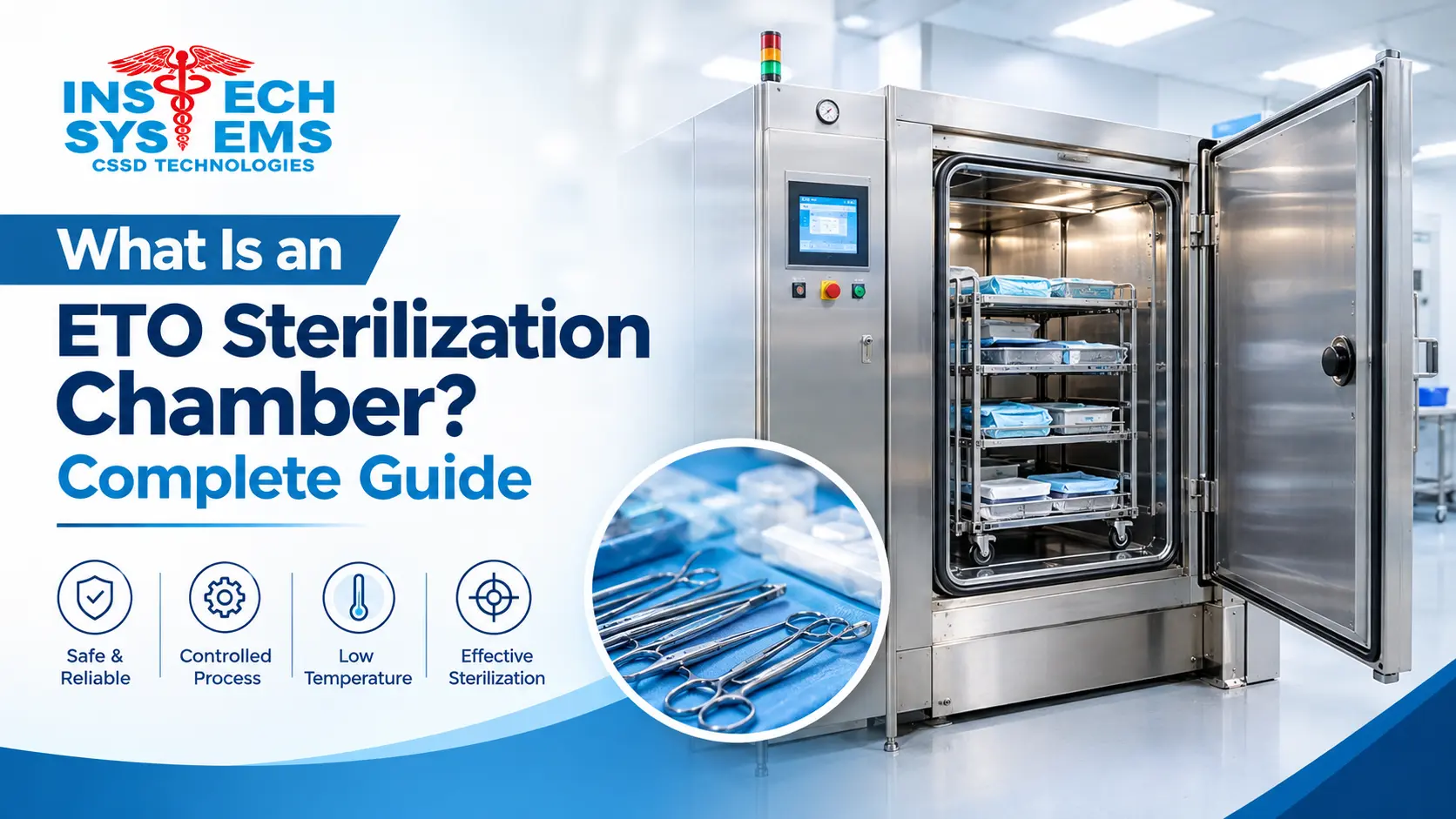
An ETO sterilization chamber is an enclosed system used to sterilize products with ethylene oxide gas under controlled process conditions. The chamber allows the sterilizing gas to come into contact with product surfaces and, depending on the product and packaging, penetrate suitable materials to reach areas that need sterilization.
Unlike steam sterilization, the ETO process operates at relatively low temperatures. This makes it suitable for certain medical devices, plastic components, packaging materials, and other products that may be damaged by excessive heat or moisture.
The chamber is not simply a sealed enclosure. It is an integrated system designed to control important parameters such as temperature, humidity, gas concentration, exposure time, pressure, and aeration.
How Does an Ethylene Oxide Chamber Work?
The working process generally consists of several controlled stages. The exact cycle parameters depend on the product, load configuration, chamber design, packaging, and validated sterilization process.
1. Loading
Products are arranged inside the chamber in a manner that allows the sterilizing gas to circulate effectively. Proper loading is important because overcrowding or incorrect placement can affect gas distribution.
2. Conditioning
Before introducing the sterilant, the chamber and product load are brought to the required process conditions. Humidity and temperature are controlled because they can influence the effectiveness of the ETO process.
3. ETO Gas Introduction
Ethylene oxide gas is introduced into the chamber according to the established cycle parameters. The gas needs to reach the relevant surfaces and product areas during the exposure stage.
4. Exposure
The products remain exposed to ETO for a defined period. During this stage, the system maintains the required process conditions to achieve the intended sterilization performance.
5. Gas Removal and Aeration
After exposure, the sterilant is removed from the chamber through the appropriate evacuation process. Aeration then helps reduce residual ETO from the sterilized products before they are handled or released according to the applicable process requirements.
Main Components of an EO Sterilization Chamber
A modern EO sterilization chamber generally consists of several integrated components that work together to maintain controlled operating conditions.
- Sterilization Chamber: The primary enclosed area where the product load is placed during the cycle.
- Vacuum System: Used to establish the required pressure conditions during different stages of the process.
- Temperature Control System: Helps maintain the desired temperature throughout the sterilization cycle.
- Humidity Control: Supports the required conditioning environment before and during ETO exposure.
- ETO Gas Delivery System: Introduces the sterilizing agent into the chamber in a controlled manner.
- Control Panel: Allows operators to manage cycle parameters and monitor the process.
- Safety Systems: Interlocks, monitoring devices, alarms, and other safety features can be incorporated to support controlled operation.
- Aeration System: Helps remove residual sterilant from products after the exposure stage.
The configuration can vary depending on chamber capacity, application, automation level, and specific customer requirements.
Why Is ETO Sterilization Used?
One of the major reasons for using an ethylene oxide sterilization chamber is its suitability for products that may not withstand high heat or moisture.
ETO sterilization can be considered for applications involving certain:
- Medical devices
- Plastic products
- Tubing and components
- Packaging materials
- Laboratory products
- Pharmaceutical-related products
- Heat-sensitive equipment
The process can be useful when conventional high-temperature sterilization methods are unsuitable for a particular product.
Advantages of an Ethylene Oxide Sterilization Chamber
An ethylene oxide chamber offers several process-related benefits when properly designed, validated, operated, and monitored.
Suitable for Heat-Sensitive Products
ETO operates at comparatively low temperatures, making it suitable for selected products that could deform, melt, or otherwise be affected by high-temperature processes.
Effective Gas Penetration
ETO gas can reach complex product surfaces and certain packaged configurations, subject to product design and validated process conditions.
Controlled Sterilization Process
Modern chambers can incorporate automated controls for temperature, pressure, humidity, exposure time, and other important cycle parameters.
Flexible Applications
ETO technology is used across different industries where low-temperature sterilization is required for suitable products.
Configurable Chamber Design
Chamber capacity and system configuration can be selected according to the expected product load, production requirements, and operating environment.
ETO Sterilization Chamber vs Steam Sterilization
ETO and steam sterilization use different approaches. Steam sterilization relies on moist heat at elevated temperatures, while ETO sterilization uses ethylene oxide gas under controlled conditions.
Steam can be highly effective for products designed to withstand heat and moisture. ETO may be considered for suitable heat- and moisture-sensitive products. Therefore, selecting a sterilization method should depend on the product, material compatibility, packaging, required process, and applicable validation requirements rather than simply choosing one technology for every application.
Important Factors When Choosing an ETO Chamber
Choosing the right EO sterilization chamber requires more than checking chamber size. Several factors should be evaluated before selecting a system.
Chamber Capacity
Determine the size and quantity of products that need to be processed in each cycle. This helps establish an appropriate working chamber volume.
Product Compatibility
The materials, packaging, geometry, and intended use of the product should be evaluated for compatibility with ETO sterilization.
Process Control
Look for a system capable of monitoring and controlling the parameters required for the intended sterilization cycle.
Safety Features
Because ethylene oxide requires careful handling, the system should incorporate appropriate engineering controls, monitoring, alarms, interlocks, and ventilation arrangements.
Aeration Requirements
Aeration is an important part of the overall process because products may retain residual sterilant after exposure. The required aeration approach should be established as part of the validated process.
Automation
Depending on production requirements, operators may benefit from automated cycle control, data monitoring, alarms, and process records.
Applications of ETO Sterilization Chambers
ETO technology has applications in industries where low-temperature sterilization is required. Medical and healthcare product manufacturers may use ETO processes for selected heat-sensitive products. Pharmaceutical and laboratory applications may also require specialized sterilization solutions depending on product characteristics.
The exact suitability of ETO should always be established through appropriate product evaluation and process validation.
Instech Systems for ETO Sterilization Solutions
Instech Systems focuses on developing practical sterilization equipment for applications requiring controlled ETO processing. Our approach considers machine capacity, product requirements, process parameters, automation, and operational safety while developing sterilization solutions.
A properly designed ethylene oxide sterilization chamber can provide a controlled environment for processing suitable heat-sensitive products. However, successful sterilization depends on much more than the chamber itself. Product compatibility, cycle development, monitoring, validation, gas handling, aeration, and safe operating practices all play important roles.
Conclusion
An ETO sterilization chamber is a specialized low-temperature sterilization system designed to process suitable products using ethylene oxide gas under controlled conditions. Its ability to work with many heat- and moisture-sensitive products makes ETO technology an important option for selected medical, pharmaceutical, laboratory, and industrial applications.
From chamber capacity and humidity control to gas exposure, monitoring, evacuation, and aeration, every stage needs to be properly considered. For organizations looking for a dependable sterilization setup, working with an experienced equipment manufacturer such as Instech Systems can help in developing a solution around specific process and production requirements.
Pingback: Ultrasonic Cleaner for Surgical Instruments: Guide