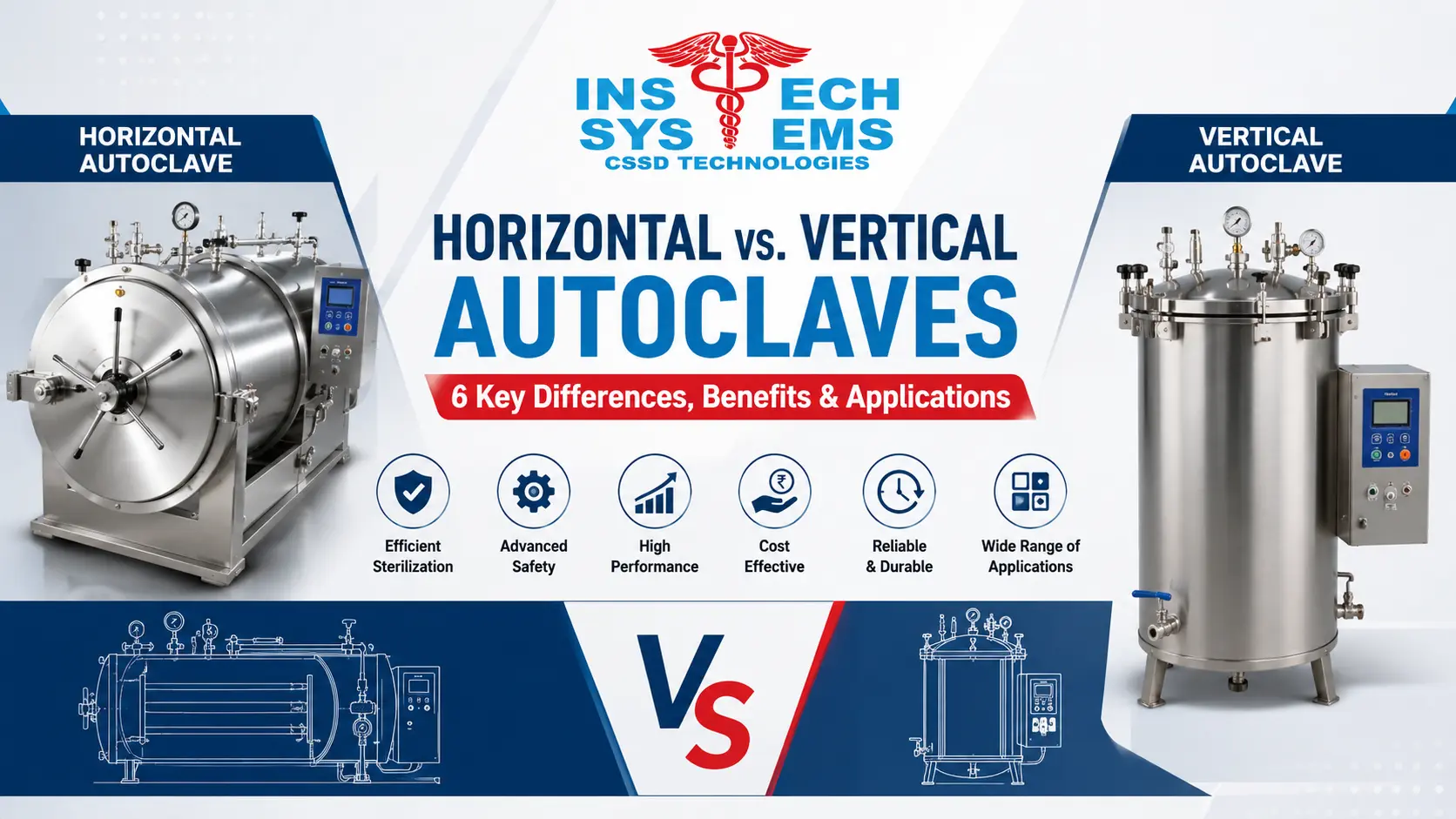
Horizontal and vertical Both systems are designed to achieve effective sterilization through saturated steam under pressure, but they differ significantly in terms of design, capacity, applications, and operational efficiency. Understanding these differences can help healthcare professionals and facility managers make informed decisions.
As a leading manufacturer of sterilization equipment, Instech Systems offers both vertical autoclave and autoclave horizontal solutions designed for hospitals, pharmaceutical companies, research laboratories, and industrial applications.
What is an Autoclave?
What is a Vertical Autoclave?
A vertical autoclave is a top-loading sterilization unit in which materials are loaded from the upper side of the chamber. These systems are compact, space-efficient, and commonly used in laboratories, clinics, and small healthcare facilities.
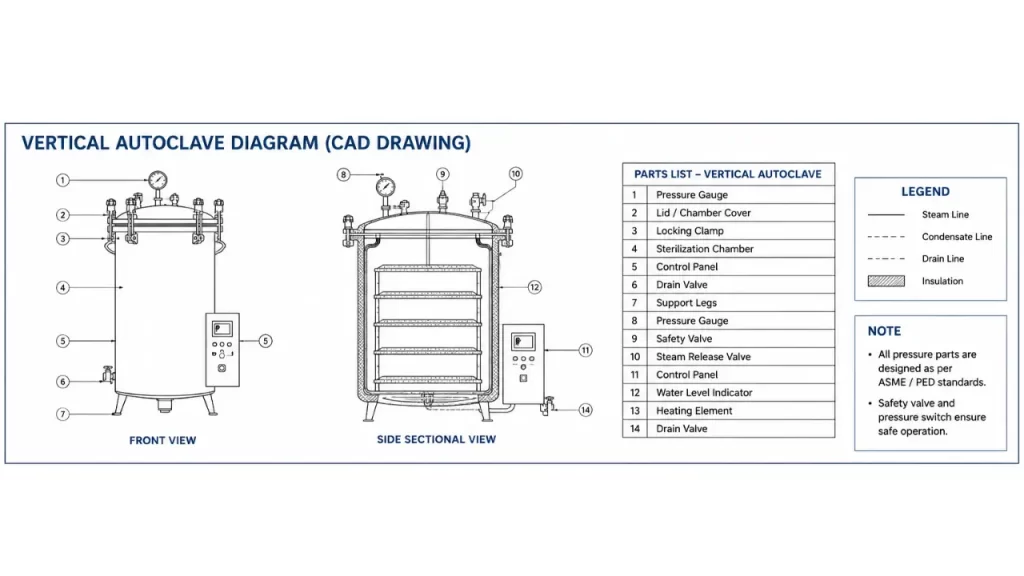
Many users search for a vertical autoclave diagram to understand its chamber structure, lid mechanism, pressure gauge, safety valve, and steam generation system. The vertical design makes loading convenient for smaller batches and routine sterilization requirements.
Vertical Autoclave Uses
The most common vertical autoclave uses include:
- Sterilization of laboratory glassware
- Culture media sterilization
- Medical instrument sterilization
- Research applications
- Microbiology laboratories
- Diagnostic centers
- Small hospitals and clinics
Because of their compact footprint, vertical autoclaves are ideal where installation space is limited.
What is a Horizontal Autoclave?
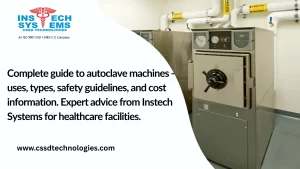
A horizontal autoclave is a front-loading sterilizer with a horizontally positioned chamber. It is designed for high-volume sterilization applications and is widely used in large hospitals, pharmaceutical manufacturing facilities, CSSD departments, and industrial environments.
A typical horizontal autoclave diagram shows a larger chamber, automated control systems, steam jacket, sliding or hinged doors, and advanced safety features that support continuous sterilization operations. Horizontal autoclaves are particularly suitable for facilities handling large sterilization loads on a daily basis.

Horizontal vs. Vertical Autoclaves: 6 Key Differences
1. Design and Loading Method
The most noticeable difference is the loading orientation.
Vertical Autoclave
- Top-loading design
- Materials inserted from above
- Compact chamber structure
Horizontal Autoclave
- Front-loading design
- Easier loading and unloading
- Better suited for large and heavy loads
Horizontal systems provide greater convenience when handling bulky instruments and sterilization carts.
2. Chamber Capacity
Capacity requirements significantly influence autoclave selection.
Vertical Autoclave
- Small to medium chamber sizes
- Suitable for moderate sterilization volumes
Horizontal Autoclave
- Large chamber capacities
- Ideal for continuous high-volume operations
Facilities processing large quantities of instruments typically prefer horizontal autoclaves.
3. Space Requirements
Space availability often determines which autoclave is appropriate.
Vertical Autoclave
- Occupies less floor space
- Ideal for laboratories and compact facilities
Horizontal Autoclave
- Requires dedicated installation area
- Better suited for industrial and hospital environments
Organizations with limited infrastructure often choose vertical units because of their compact design.
4. Application Areas
Both systems serve different operational needs.
Vertical Autoclave Applications
- Research laboratories
- Educational institutions
- Diagnostic centers
- Small clinics
- Biotechnology labs
Horizontal Autoclave Applications
- Hospitals
- CSSD departments
- Pharmaceutical manufacturing
- Medical device production
- Industrial sterilization facilities
5. Automation and Operational Efficiency
Modern horizontal autoclaves often include advanced automation features.
Vertical Autoclave
- Semi-automatic operation
- Simple control systems
- Suitable for routine sterilization
Horizontal Autoclave
- PLC-based controls
- Touchscreen interfaces
- Automated sterilization cycles
- Data logging and monitoring
Automation improves efficiency and minimizes operator intervention.
6. Cost and Maintenance
Budget considerations are important for every facility.
Vertical Autoclave
- Lower initial investment
- Easier maintenance
- Cost-effective for smaller facilities
Horizontal Autoclave
- Higher upfront investment
- Advanced systems require professional maintenance
- Better long-term productivity for large-scale operations
Difference Chart: Horizontal vs Vertical Autoclaves
| Feature | Vertical Autoclave | Horizontal Autoclave |
|---|---|---|
| Loading Type | Top Loading | Front Loading |
| Installation Space | Compact | Larger Space Required |
| Chamber Capacity | Small to Medium | Medium to Large |
| Automation Level | Basic to Semi-Automatic | Fully Automatic Options |
| Ideal Users | Laboratories & Clinics | Hospitals & Pharmaceutical Plants |
| Sterilization Volume | Moderate | High Volume |
| Maintenance Cost | Lower | Higher |
| Operational Efficiency | Standard | Advanced |
| Initial Investment | Lower | Higher |
| Best Application | Routine Sterilization | Continuous Sterilization Operations |
Benefits of Vertical Autoclaves
A vertical autoclave offers several advantages for laboratories and healthcare facilities.
- Space Saving Design- Its compact structure allows installation even in limited spaces.
- Cost-Effective Solution- Lower purchase and operating costs make it attractive for small organizations.
- Easy Installation- Vertical systems generally require minimal infrastructure changes.
- Versatile Applications- Suitable for sterilizing instruments, media, glassware, and laboratory equipment.
- User-Friendly Operation- Simple controls make operation straightforward for technicians and laboratory staff.
Benefits of Horizontal Autoclaves
Horizontal autoclaves provide numerous advantages for large-scale sterilization operations.
- Higher Throughput- Large chambers allow processing of more instruments in each cycle.
- Improved Workflow- Front-loading design enhances operational efficiency.
- Advanced Sterilization Control- Modern systems offer precise temperature and pressure regulation.
- Better Productivity- Ideal for facilities requiring multiple sterilization cycles daily.
- Compliance Support- Many horizontal autoclaves support validation requirements for pharmaceutical and healthcare industries.
Which Autoclave is Best for Hospitals?
Hospitals generally require high-capacity sterilization systems capable of processing surgical instruments, trays, textiles, and medical equipment continuously.
For such environments, horizontal autoclaves are often the preferred choice because they provide:
- Greater capacity
- Faster workflow
- Advanced automation
- Better infection control support
However, smaller hospitals and specialty clinics may still benefit from vertical autoclaves depending on their sterilization volume.
Why Choose Instech Systems?
Instech Systems is a trusted manufacturer of both vertical autoclave and horizontal autoclave systems for hospitals, pharmaceutical companies, laboratories, and research facilities. Our sterilization solutions are engineered to deliver reliable performance, operational safety, and compliance with industry standards. With years of expertise in sterilization technology, we provide customized autoclave solutions that meet the unique requirements of healthcare and industrial applications.
Conclusion
Both horizontal and vertical autoclaves are highly effective sterilization systems, but the right choice depends on your facility’s operational requirements. A vertical autoclave is ideal for laboratories and smaller facilities that require compact and cost-effective sterilization. In contrast, a horizontal autoclave is better suited for hospitals, CSSD departments, and pharmaceutical industries handling large sterilization volumes.
Understanding the key differences, benefits, and applications of these systems can help organizations make informed investment decisions. Whether you need a compact laboratory sterilizer or a high-capacity hospital solution, selecting the appropriate autoclave ensures safe, efficient, and reliable sterilization for years to come.