
Sterilization is one of the essential functions in laboratories, hospitals, pharmaceutical industries, research laboratories, and biotechnology companies. Autoclaves are some of the most effective sterilization equipment used for this purpose. Sterilizers work by eliminating any pathogens present in the laboratory tools or apparatus. It is important to understand what is autoclave means and its working mechanism.
In this article, we will explore the working principle of a laboratory autoclave, its components, applications, benefits, and importance in modern laboratories.
What is Autoclave?
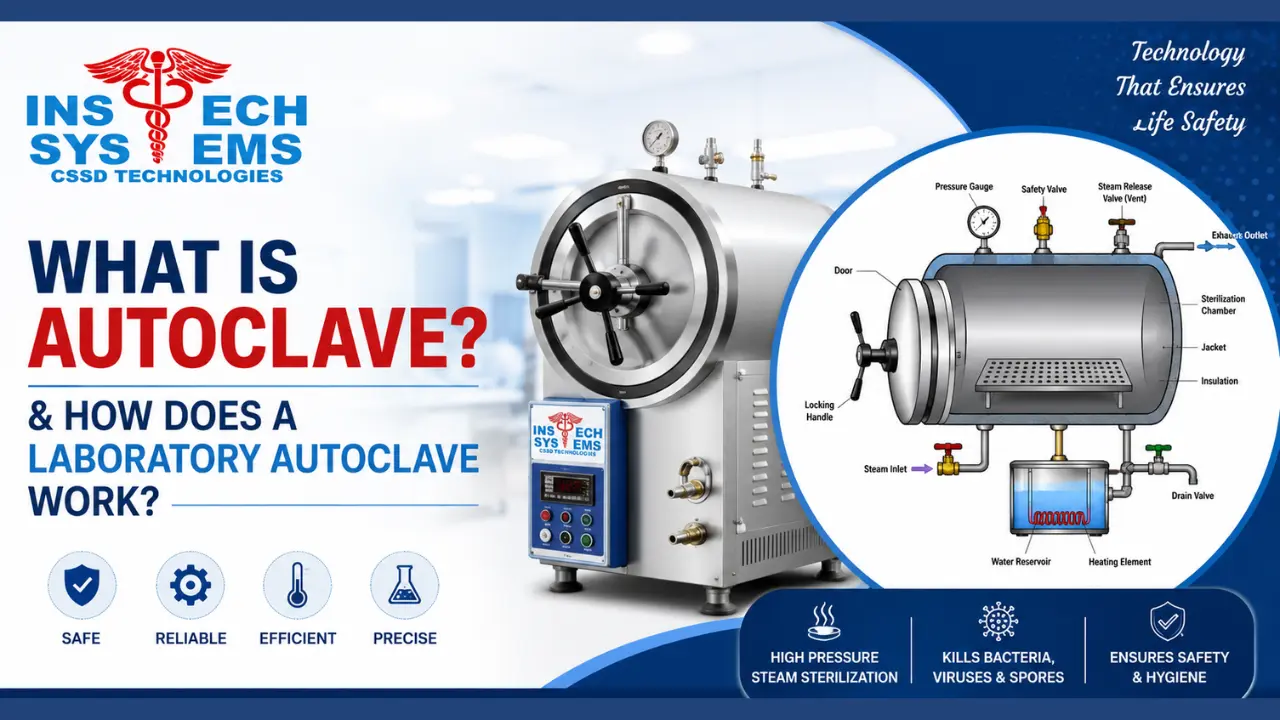
An autoclave is a specialized sterilization device that uses high-pressure saturated steam to destroy microorganisms and contaminants present on laboratory instruments, glassware, media, and other materials. The combination of heat, pressure, and moisture effectively sterilizes equipment that cannot be disinfected through ordinary cleaning methods. The answer to the question what is autoclave can be summarized simply: it is a machine designed to sterilize materials using pressurized steam at temperatures higher than the boiling point of water. Autoclaves are widely used in hospitals, research laboratories, microbiology labs, pharmaceutical manufacturing units, food testing laboratories, and educational institutions.
Importance of Autoclaves in Laboratories
Laboratories regularly handle biological samples, cultures, chemicals, and instruments that may contain harmful microorganisms. Proper sterilization is necessary to prevent contamination, ensure accurate test results, and maintain a safe working environment.
A laboratory autoclave helps:
- Eliminate bacteria, viruses, and spores
- Prevent cross-contamination
- Sterilize laboratory instruments and glassware
- Ensure reliable experimental outcomes
- Meet regulatory and safety standards
- Protect laboratory personnel and patients
Because of these advantages, autoclaves have become an indispensable part of modern laboratory infrastructure.
Autoclave in Microbiology
The role of autoclave in microbiology is especially significant. Microbiology laboratories work with microorganisms that can contaminate experiments and pose health risks if not handled properly.
In microbiology applications, autoclaves are used to sterilize:
- Culture media
- Petri dishes
- Laboratory glassware
- Pipettes
- Biohazardous waste
- Surgical instruments
- Reusable laboratory tools
Without proper sterilization, microbial growth can compromise research findings and laboratory safety. This is why the use of an autoclave in microbiology is considered a standard practice across laboratories worldwide.
Components of a Laboratory Autoclave
To understand how an autoclave functions, it is important to know its major components.
- Sterilization Chamber- This is the main compartment where materials are placed for sterilization.
- Steam Generator- Generates steam required for the sterilization process.
- Pressure Vessel- Designed to withstand high pressure and temperature conditions.
- Control Panel- Allows users to set temperature, pressure, and sterilization cycle duration.
- Safety Valve- Protects the system from excessive pressure buildup.
- Exhaust System- Removes air and releases steam after sterilization is completed. These components work together to ensure effective and consistent sterilization.
Autoclave Diagram and Working Structure
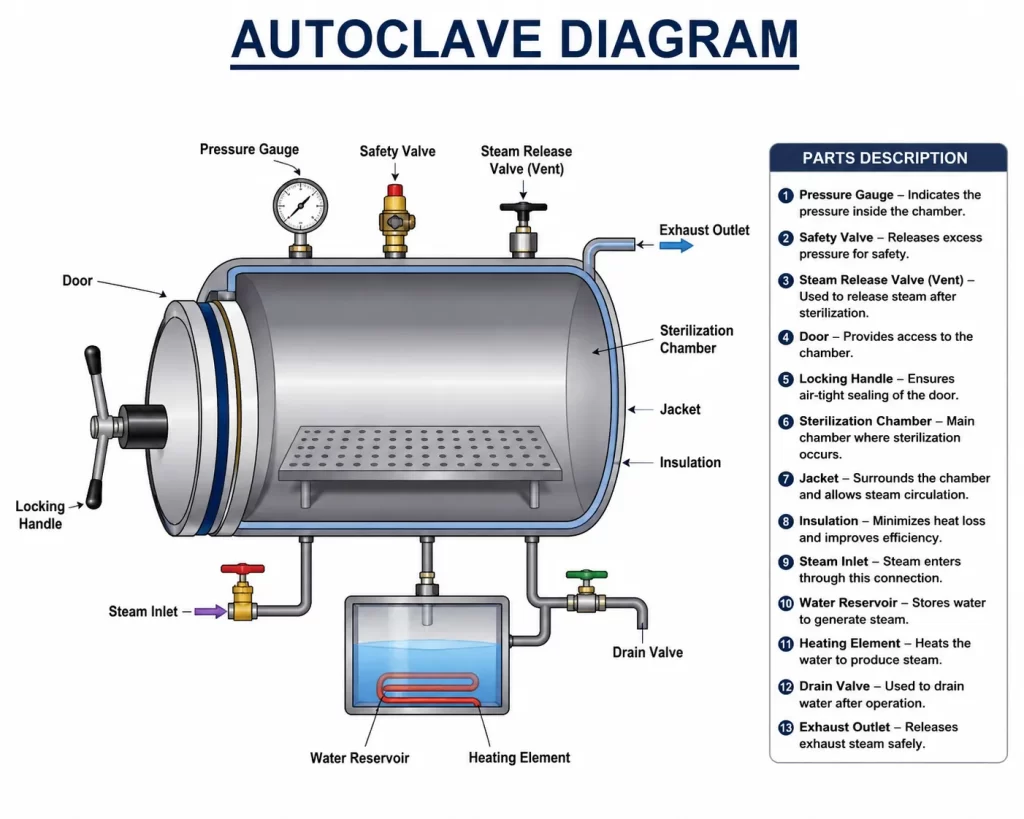
When studying laboratory sterilization systems, users often refer to an autoclave diagram to understand the internal arrangement of components.
A typical diagram of autoclave includes:
- Sterilization chamber
- Steam inlet
- Heating element
- Pressure gauge
- Safety valve
- Drain system
- Control unit
An autoclave machine diagram helps operators understand steam flow, pressure regulation, and chamber design. Such diagrams are commonly used in training programs, laboratory manuals, and engineering documentation to explain autoclave operation and maintenance.
How Does a Laboratory Autoclave Work?
The working principle of a laboratory autoclave is based on steam sterilization under pressure. The process involves exposing materials to saturated steam at high temperatures, typically between 121°C and 134°C.
Step 1: Loading the Chamber
Laboratory instruments, glassware, media, or waste materials are placed inside the sterilization chamber. Proper spacing is maintained to allow steam circulation.
Step 2: Air Removal
Before sterilization begins, air inside the chamber must be removed. Air pockets can prevent steam from contacting surfaces effectively. Modern autoclaves use vacuum systems or gravity displacement methods to remove air.
Step 3: Steam Generation
Water is heated to generate saturated steam. The steam enters the chamber and replaces the remaining air.
Step 4: Pressurization
As steam fills the chamber, pressure increases. Increased pressure allows temperatures to rise beyond the normal boiling point of water.
Typical sterilization conditions include:
- Temperature: 121°C
- Pressure: 15 psi
- Holding Time: 15–30 minutes
Step 5: Sterilization Phase
During this stage, steam penetrates materials and destroys microorganisms by coagulating their cellular proteins. The combination of heat, moisture, and pressure ensures complete sterilization.
Step 6: Cooling and Drying
After the sterilization cycle is completed, steam is released, pressure is reduced, and materials are allowed to cool. Some advanced autoclaves include drying cycles to remove residual moisture.
Step 7: Unloading
Once the chamber reaches a safe temperature and pressure level, sterilized materials can be removed for use or storage.
Why Steam is Effective for Sterilization
Steam is considered one of the most effective sterilizing agents because it:
- Transfers heat rapidly
- Penetrates porous materials
- Destroys microorganisms efficiently
- Reaches inaccessible surfaces
- Leaves no harmful chemical residue
This makes steam sterilization both environmentally friendly and highly reliable.
Types of Laboratory Autoclaves
Different laboratory applications require different autoclave designs.
Vertical Autoclave
Commonly used in microbiology laboratories and research centers. These units occupy less floor space and are suitable for moderate sterilization workloads.
Horizontal Autoclave
Used in large laboratories and pharmaceutical facilities where high-volume sterilization is required.
Portable Autoclave
Compact and suitable for small laboratories, clinics, and field applications.
Vacuum Autoclave
Equipped with vacuum systems that improve steam penetration and sterilization efficiency.
Applications of Laboratory Autoclaves
Laboratory autoclaves are used across numerous industries and sectors.
Healthcare Facilities
- Surgical instrument sterilization
- Medical waste treatment
Pharmaceutical Industry
- Equipment sterilization
- Production area contamination control
Biotechnology Laboratories
- Sterilization of culture media
- Research material processing
Educational Institutions
- Laboratory equipment sterilization
- Student training and experiments
Food and Beverage Testing Laboratories
- Sample preparation
- Microbial contamination control
These diverse applications highlight the importance of autoclaves in maintaining quality and safety standards.
Benefits of Using a Laboratory Autoclave
A laboratory autoclave offers several advantages:
- Highly Effective Sterilization- Destroys bacteria, viruses, fungi, and spores efficiently.
- Improved Laboratory Safety- Reduces exposure to hazardous biological contaminants.
- Cost-Effective Operation- Reusable instruments can be sterilized repeatedly without expensive chemical treatments.
- Environmentally Friendly- Uses water and steam instead of harmful chemical disinfectants.
- Regulatory Compliance- Supports laboratory compliance with international quality and safety standards.
Maintenance Tips for Laboratory Autoclaves
To ensure long-term performance and reliability, laboratories should follow proper maintenance practices:
- Inspect gaskets regularly
- Clean the chamber after use
- Check safety valves periodically
- Monitor pressure and temperature indicators
- Replace worn components when necessary
- Schedule preventive maintenance inspections
Routine maintenance helps maximize efficiency and extends equipment lifespan.
Conclusion
Knowing the concept of autoclave and working of autoclave in laboratory is very important for someone working in laboratories and related to microbiological experiments. The use of autoclaves with high-pressure steam makes this process of sterilization convenient and eco-friendly.
Whether viewed through an autoclave diagram, a diagram of autoclave, or an autoclave machine diagram, the underlying principle remains the same: using pressurized steam to eliminate harmful microorganisms and ensure sterile working conditions. From its crucial role in autoclave in microbiology applications to its widespread use across industries, the laboratory autoclave remains one of the most important tools for maintaining safety, accuracy, and quality in modern scientific environments.