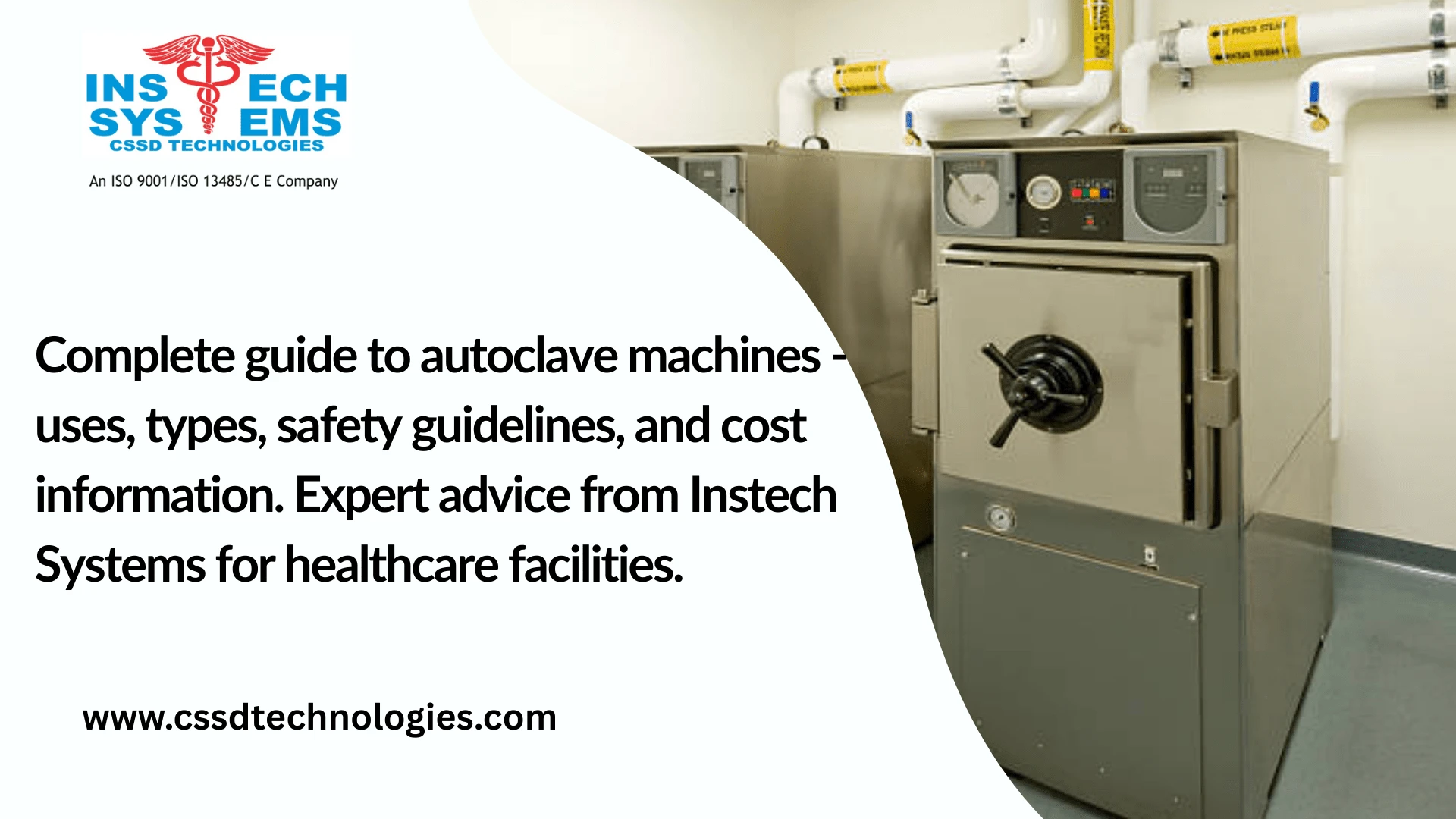
When it comes to keeping medical tools and equipment clean and safe, autoclave machines are the best solution. At Instech Systems, we understand how important it is to have the right sterilization equipment for your healthcare facility. This guide will help you learn everything about autoclave machines, from how they work to what they cost.
What is an Autoclave Machine?
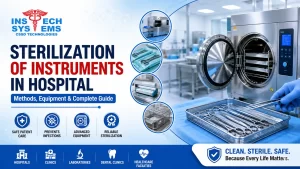
An autoclave is a high-pressure steam sterilization device designed to eliminate microorganisms such as bacteria, viruses, and spores. It uses a combination of temperature, pressure, and time to ensure complete sterilization. Different types of autoclave sterilization are used depending on the nature of materials and industry requirements, making it important to understand how each system works.
How Does an Autoclave Work?
The process is quite simple but very effective:
Step 1: Loading Medical tools and equipment are placed inside special trays or containers. Everything must be arranged properly so steam can reach all surfaces.
Step 2: Heating The machine heats water to create steam. The temperature usually goes up to 121°C to 134°C, which is much hotter than boiling water.
Step 3: Pressure Building As the steam builds up, pressure increases inside the chamber. This helps the steam penetrate better and work faster.
Step 4: Sterilization Time Items stay in the hot steam for a specific time, usually 15 to 60 minutes, depending on what’s being cleaned.
Step 5: Cooling and Drying After sterilization, the machine slowly cools down and removes moisture from the items.
Main Uses of Autoclave Machines
Hospitals and Clinics
Hospitals use autoclaves every day to clean surgical instruments, needles, and other medical tools. Without proper sterilization, patients could get serious infections during medical procedures.
Dental Offices
Dentists need clean tools for every patient. Autoclave machines help dental offices sterilize drills, forceps, mirrors, and other dental equipment quickly and safely.
Laboratories
Research labs and testing facilities use autoclaves to sterilize glass containers, petri dishes, and other lab equipment. This prevents contamination that could ruin important experiments or tests.
Veterinary Clinics
Animal hospitals also need sterile equipment for surgeries and treatments. Autoclave machines help vets provide safe care for pets and other animals.
Beauty Salons and Tattoo Parlors
Many beauty businesses use autoclaves to clean tools like scissors, tweezers, and tattoo equipment to prevent the spread of infections.
Pharmaceutical Companies
Drug manufacturers use large autoclave systems to sterilize equipment and containers used in making medicines.
Types of Autoclave Machines
There are several types of autoclave systems available, each designed for specific applications and operational needs.
Gravity Displacement Autoclave
This is one of the most commonly used autoclave types, especially in laboratories and small healthcare facilities. It operates by allowing steam to enter the chamber and naturally displace air. Due to its simple working mechanism, it is considered a reliable and cost-effective solution for basic sterilization tasks. However, it may not provide deep penetration for complex or porous instruments.
Pre-Vacuum (High Vacuum) Autoclave
The pre-vacuum autoclave is more advanced and efficient compared to basic systems. It removes air from the chamber using a vacuum pump before introducing steam, ensuring better penetration and uniform sterilization. This type of autoclave is widely used in hospitals and CSSD units where high-level sterilization is required. Its ability to handle complex instruments makes it one of the most preferred autoclave types in modern healthcare environments.
Portable Autoclave
Portable autoclaves are compact units designed for small-scale applications. They are easy to handle and ideal for clinics, small laboratories, or remote locations. While convenient, this type of autoclave has limited capacity and is best suited for basic sterilization needs rather than large-scale operations.
Horizontal Autoclave
Horizontal autoclaves are large-capacity systems commonly used in industrial and hospital settings. These systems are designed for bulk sterilization and can handle high workloads efficiently. Among all types of autoclave sterilization, this category is best suited for large-scale operations where consistent and high-volume sterilization is required.
Vertical Autoclave
Vertical autoclaves are top-loading units that are widely used in laboratories and research facilities. Their compact design makes them suitable for spaces where floor area is limited. This autoclave type is particularly useful for sterilizing liquids and smaller batches of instruments.
Guidelines for Using Autocl ave Machines
Proper use and maintenance of autoclaves are vital to ensure effective sterilization and safe operation. Here are some important guidelines:
- Loading the Autoclave: Do not overcrowd the chamber. Items should be arranged so that steam can circulate freely. Use racks or trays to keep instruments separated.
- Packaging Materials: Use autoclave-safe wraps or containers that allow steam penetration. Avoid materials like aluminum foil that can block steam.
- Cycle Settings: Select the correct temperature, pressure, and time based on the items being sterilized. Typically, 121 degrees Celsius for 30-60 minutes works for most loads.
- Safety Precautions: Never open the autoclave before the pressure returns to normal and the temperature cools down to avoid burns or accidents.
- Routine Cleaning and Maintenance: Regularly clean the chamber, door seals, and trays to prevent buildup that could affect performance. Follow manufacturer instructions for maintenance checks.
- Validation and Testing: Periodically test the autoclave’s effectiveness using biological indicators or chemical indicators to confirm complete sterilization.
Factors Affecting Autoclave Machine Cost
The price of an autoclave machine depends on several factors:
- Size and Capacity: Small tabletop autoclaves designed for clinics or small labs are less expensive, while large industrial autoclaves meant for hospitals or industries cost more.
- Type and Features: Basic models with manual controls are cheaper. Advanced machines with digital controls, automated cycles, data recording, and safety features cost more.
- Brand and Quality: Reputed brands with durable materials and good after-sales service usually come at a higher price but offer better reliability.
- Installation and Maintenance: Some autoclaves require professional installation, which adds to the cost. Ongoing maintenance and spare parts also contribute to total expenses.
Important Guidelines for Using Autoclaves
Before Using the Machine
Check Everything First Always inspect the autoclave before starting. Look for any damage, leaks, or problems with doors and seals.
Load Properly Don’t overcrowd the chamber. Items need space for steam to circulate around them. Place heavy items on the bottom and lighter ones on top.
Use the Right Containers Only use autoclave-safe materials like stainless steel or special plastics. Never put regular plastic or sealed containers inside.
Add Water Make sure there’s enough distilled water in the reservoir. Never use tap water as it contains minerals that can damage the machine.
During Operation
Set Correct Temperature and Time Different items need different settings. Follow the manufacturer’s guidelines for temperature and sterilization time.
Don’t Open During Cycles Never try to open the door while the autoclave is running. The steam inside is extremely hot and can cause serious burns.
Monitor the Process Keep an eye on temperature and pressure gauges to make sure everything is working correctly.
After Sterilization
Let it Cool Down Wait for the machine to cool completely before opening the door. Hot steam can escape and cause injuries.
Check Items are Dry Items should be completely dry before removing them. Wet items can pick up germs from the air.
Store Properly Keep sterilized items in clean, dry places until they’re needed.
Safety Tips for Autoclave Use
Personal Protection
Always wear heat-resistant gloves when loading and unloading the autoclave. Protect your eyes with safety glasses if needed.
Training is Important
Make sure everyone who uses the autoclave knows how to operate it safely. Proper training prevents accidents and ensures effective sterilization.
Regular Maintenance
Schedule regular check-ups for your autoclave machine. Clean filters, check seals, and replace worn parts as needed.
Emergency Procedures
Know what to do if something goes wrong. Have emergency contacts ready and know how to shut down the machine quickly if needed.
Autoclave Machine Costs
The cost of autoclave machines varies widely based on size, features, and quality. Here’s what you can expect:
Small Tabletop Models
Basic countertop autoclaves start around ₹50,000 to ₹2,00,000. These are good for small dental offices or beauty salons.
Medium-Sized Units
Floor-standing models for clinics and small hospitals range from ₹3,00,000 to ₹8,00,000. They offer more capacity and advanced features.
Large Hospital Systems
Big autoclave systems for major hospitals can cost ₹10,00,000 to ₹50,00,000 or more. These handle high volumes and have computerized controls.
Factors That Affect Price
Size and Capacity Larger machines that can sterilize more items at once cost more money.
Features and Controls Automatic systems with digital displays and programmable cycles are more expensive than basic manual models.
Brand and Quality Well-known brands with good reputations typically cost more but offer better reliability and support.
Installation and Training Some suppliers include installation and staff training in the price, while others charge extra for these services.
Maintenance and Operating Costs
Besides the initial purchase price, consider ongoing costs:
Regular Maintenance
Professional servicing costs around ₹10,000 to ₹30,000 per year, depending on the machine size and usage.
Replacement Parts
Seals, filters, and other parts need replacement over time. Budget ₹5,000 to ₹20,000 annually for parts.
Energy Costs
Autoclaves use electricity to heat water and run pumps. Larger machines consume more power and increase utility bills.
Water and Supplies
You’ll need distilled water and cleaning supplies for regular operation and maintenance.
Choosing the Right Autoclave for Your Needs
- Consider Your Volume– Think about how many items you need to sterilize each day. A busy hospital needs a different machine than a small dental office.
- Available Space– Measure your available space carefully. make sure you have room for the machine And safe operation around it.
- Budget Planning– Consider both upfront costs and ongoing expenses. Sometimes paying more initially saves money in the long run through Better efficiency and reliability.
- Future Growth– Choose a Machine that can handle your current needs plus some Growth. Its Often better to buy slightly more capacity than you need right now.
How to Choose the Right Autoclave
Choosing the right autoclave is not just about selecting a machine—it involves understanding your specific operational needs. The first factor to consider is the application. Hospitals and pharmaceutical industries usually require advanced systems, while laboratories may function efficiently with smaller units.
Capacity is another important consideration. If your operations involve large volumes of materials, a horizontal autoclave is more suitable. On the other hand, for limited usage, vertical or portable models can be more practical.
The type of materials being sterilized also plays a key role. Different types of autoclave sterilization are designed for solids, liquids, or porous materials. Selecting the wrong system can affect sterilization efficiency and safety.
Space availability and installation requirements should also be evaluated carefully. Facilities with limited space may benefit from compact designs, while larger facilities can accommodate high-capacity systems.
Budget is another deciding factor, but it should not compromise quality and efficiency. Investing in a reliable autoclave ensures better performance and reduces long-term maintenance costs. Modern systems also offer advanced features such as digital controls and automated cycles, which improve usability and consistency.
Conclusion
Autoclave machine are essential equipment for any healthcare facility, laboratory, or business that needs sterile tools and equipment. understanding how they work, following proper guidelines, and choosing the right machine for your needs ensures safe and effective sterilization.
The investment in a quality autoclave machine pays For itself through reliable operation, patient safety, and compliance with health regulations. at Instech Systems, We re here to help you find the perfect autoclave solution for your facility.
Contact us today to learn more about our autoclave machine and how we can help you Maintain the highest standards of cleanliness and safety in your workplace.