Sterilization plays an important role in pharmaceutical manufacturing, healthcare facilities, biotechnology laboratories, and research institutions. Any compromise in the sterilization process can lead to contamination, regulatory non-compliance, and serious safety risks. For this reason, industries rely on advanced sterilization technologies such as the HPHV steam sterilizer, which offers consistent, validated, and highly effective sterilization results. This blog explains the HPHV Steam Sterilizer working principle, its cycle process, applications, and industrial importance in detail.
At Instech Systems, HPHV steam sterilizer machines are manufactured to meet stringent international standards, ensuring reliable performance and long-term operational safety.
What is an HPHV Steam Sterilizer?
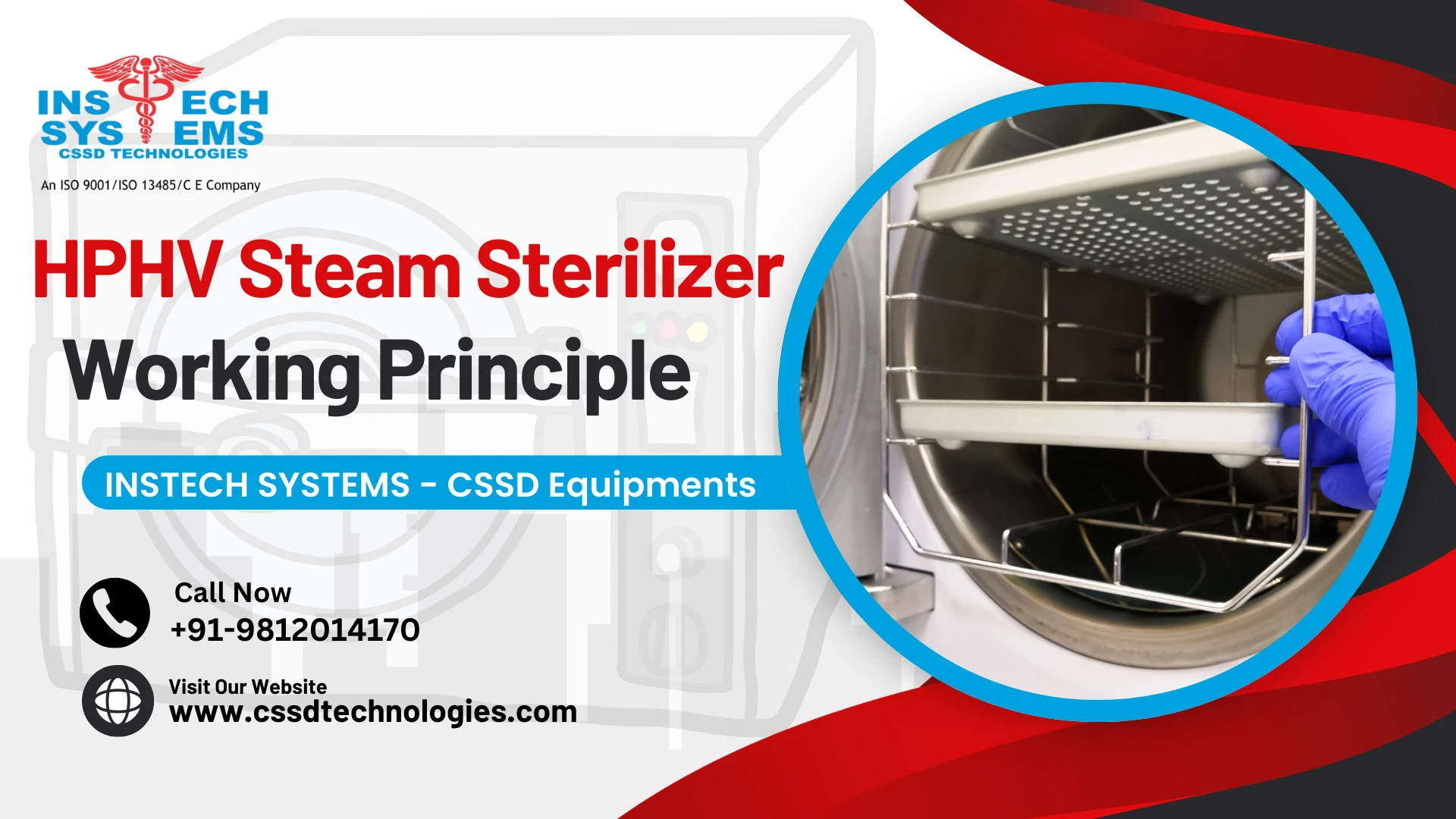
HPHV stands for High Pressure High Vacuum. An HPHV steam sterilizer is a specialized autoclave designed to sterilize materials using saturated steam under high pressure combined with deep vacuum technology. Unlike conventional gravity autoclaves, this system removes air completely from the sterilization chamber before steam injection, allowing uniform steam penetration across all surfaces.
An HPHV steam sterilizer machine is especially suitable for porous loads, wrapped instruments, garments, glassware, and pharmaceutical components where complete sterilization is critical. Its ability to maintain precise pressure, temperature, and vacuum levels makes it ideal for regulated industries.
Understanding the HPHV Steam Sterilizer Working Principle
The HPHV Steam Sterilizer working principle is based on the scientific concept that saturated steam transfers heat efficiently only when air is fully eliminated from the chamber. Air pockets act as barriers and prevent proper steam contact, which may result in incomplete sterilization. HPHV technology overcomes this limitation through controlled vacuum stages.
The sterilization process begins with multiple pre-vacuum pulses. During this stage, high-capacity vacuum pumps evacuate air from the chamber and from within the load. This ensures that steam can later reach even the most difficult-to-access areas. Effective air removal is the foundation of a successful HPHV cycle in autoclave systems.
Once the required vacuum level is achieved, saturated steam is introduced into the chamber under high pressure. As steam comes in contact with the cooler surfaces of the load, it condenses and releases latent heat. This intense heat destroys microorganisms by denaturing proteins and disrupting cellular structures. Bacteria, viruses, fungi, and heat-resistant spores are effectively eliminated during this phase.
After steam injection, the sterilizer enters the exposure or holding phase. In this stage, the chamber maintains a specific temperature and pressure for a defined duration, typically at 121°C or 134°C depending on the application. Precise control during this phase ensures consistent and repeatable sterilization outcomes. Modern HPHV steam sterilizer machines use PLC-based systems to monitor and regulate all critical parameters.
Once the sterilization holding time is complete, the system initiates post-vacuum drying. Steam is evacuated from the chamber, and residual moisture is removed from the load. This drying phase is essential to prevent corrosion, microbial recontamination, and moisture-related damage. The drying process completes the HPHV cycle in autoclave, making the load safe for handling and storage.
Importance of the HPHV Cycle in Autoclave Systems
The HPHV cycle in autoclave is a fully automated and validated sequence designed to ensure reproducible sterilization results. Each cycle follows predefined steps that minimize human error and maximize process reliability. Continuous monitoring of temperature, pressure, and vacuum ensures that the sterilization parameters remain within acceptable limits throughout the cycle.
Data logging and recording features further support regulatory compliance by providing traceable records for audits and validation. This makes the HPHV steam sterilizer a preferred choice in pharmaceutical and healthcare environments where documentation and process control are mandatory.
Applications of HPHV Steam Sterilizer
An HPHV steam sterilizer machine is widely used in pharmaceutical production units for sterilizing equipment, tools, garments, glassware, and process accessories. In biotechnology and research laboratories, it helps maintain aseptic conditions required for sensitive experiments and formulations.
Hospitals and medical device manufacturing facilities also rely on HPHV steam sterilizers for the sterilization of surgical instruments, linens, and reusable medical components. Its versatility and reliability make it suitable for both industrial and healthcare applications.
Advantages of Using an HPHV Steam Sterilizer
One of the key advantages of the HPHV steam sterilizer is its ability to achieve complete steam penetration through deep vacuum technology. This significantly reduces the risk of sterilization failure. The process is chemical-free, environmentally safe, and cost-effective compared to alternative sterilization methods.
Additional benefits include shorter cycle times, consistent performance, low maintenance requirements, and long service life. The robust construction and advanced automation of an HPHV steam sterilizer machine also ensure compliance with GMP, FDA, and other global regulatory standards.
Why Choose INSTECH SYSTEMS?
INSTECH SYSTEMS offers advanced HPHV steam sterilizers designed with precision engineering and high-quality materials. Each system is customized to meet specific customer requirements while ensuring safety, efficiency, and compliance. Our machines are built for reliable performance in demanding industrial environments.
Conclusion
The HPHV Steam Sterilizer working principle is a proven and scientifically validated approach that combines high pressure, deep vacuum, and saturated steam to achieve effective sterilization. By ensuring complete air removal, uniform heat transfer, and controlled drying, the HPHV steam sterilizer delivers consistent and reliable results.
For industries where sterilization quality directly impacts product safety and regulatory compliance, an advanced HPHV steam sterilizer machine from INSTECH SYSTEMS is a dependable and long-term solution.
FAQs
Q1. Is 121 °C always sufficient?
Depends on load type and bioburden. Sometimes 134 °C fast cycle is used.
Q2. What is F0 value?
The cumulative lethal effect at 121 °C equivalent.
Q3. When to do Bowie-Dick test?
Daily before porous load cycles.
Q4. Why does load remain wet?
Due to short drying, low jacket temperature, or overloading.
Q5. Can liquids be sterilized in HPHV?
Yes, but special liquid cycles with cooling and overpressure control are needed.